Showing posts with label writing advice. Show all posts

Friday, 21 September 2012

The Meaning of Children: Latest interview, at Inspiration Forum UK

From Inspiration Forum UK, September 2012

Thank you, Fiona McVie!

Those books aren't just going to read themselves, you know...
Our Interview with Beverly Akerman 
 
Name Beverly Akerman

Age North of 40, south of 60. Okay, you win: I’m 52.

Where are you from? Montreal, Quebec, Canada.

A little about your self ie. your education, family life, etc.
Born and raised in Montreal. In fact, I’ve never lived anywhere else. Sometimes I feel a bit bad about that, like it’s a character flaw or something. I have three kids well on their way to being grown-up. One moved out of the house to live on his own just this summer…and it was my middle guy, the one who’s always been easiest to get along with and the most helpful. (Or maybe it just seems that way; hindsight, rose coloured glasses and all that. Still, he was the only one of the three who used to point to his bed at night when we’d be rocking him in the rocking chair. He did like his sleep!) My husband is still here at home with me. I’m happy about that, actually. He worked in politics for many years, while our family was young. So I worked full-time, mostly, and single-parented it half the time.

I was busy and exhausted, so over-programmed that I don’t have all that many memories of that period. Why do we do this to ourselves? I suppose you’ve heard the saying, “Of course women can have it all: just not all at the same time.”

I have BSc and MSc degrees in biology from McGill University and worked for over 20 years in molecular genetics research. But I’d always known I’d be a writer some day. (At least, I’d always wanted/intended/hoped to be a writer some day…)

Fiona: Tell us your latest news?
I just had my longest ever giveaway on Amazon for the e-version of my award winning short story collection, The Meaning of Children, and it went really well. Over 4300 downloads, which I think is amazing for literary fiction. And the reviews—from periodicals as well as “real” readers-- are absolutely incredible as well. Words like “luminous,” “illuminated,” “haunting,” “a life-altering read,” “profound,” “a book of rare sensitivity and masterful creative writing”…You’d have to look on the Amazon.com book page to see them (it hasn’t quite caught on yet in the UK, I’m afraid) and on my blog.

Here are some links:
http://www.amazon.com/The-Meaning-of-Chi...B007H067R6
http://www.amazon.co.uk/The-Meaning-of-C...B007H067R6
http://beverlyakerman.blogspot.ca/p/rad-...aning.html

Fiona: When and why did you begin writing?
I'd always thought I'd be a writer some day. My first publication was a poem that won an honourable mention when I was nine and a half years old, something I wrote about in The Rampike last year, in the creative nonfiction piece "Aversion Conditioning, or Why I am Somewhat Conflicted About Poetry.” But I guess my imagination-my self confidence?-failed me because I could never seriously picture myself as a writer. So I put it aside, joked about needing to live life first in order to have something to write about (though maybe that isn't a joke), and tried to prove something (though exactly what and to whom I'm not quite sure) by distinguishing myself in math and science, the subjects everybody else seemed to think were the hardest.

I'd been keen on genetics since first learning about it in high school and in grade 10, when we were offered testing for Tay Sachs disease carrier status and one of my friends tested positive, I was well and duly hooked on DNA.

I majored in biology (human genetics) and went on to graduate work in genetics, where one of my most cherished delusions was that, once I finished the residency requirement and no longer paid by the credit, I'd be able to take all the English and creative writing courses I'd always dreamt of.

Guess how much time I had for non-science courses while pursuing a research degree in genetics?

That's right: none.

By 2003, I'd been in science for over two decades, mostly in McGill-affiliated labs. I'd been fairly successful, writing or co-writing 19 papers, mostly on mutations associated with several rare diseases. I also had a life--three kids and a husband who made a career in politics. But a funny thing happened as I waltzed through the genomes: the work had started to lose its meaning for me.

Something was wrong, I just couldn't put my finger on what, exactly.

And then my father-in-law, Gerry Copeman, died of lung cancer.

Gerry and I didn't even get along that well, although we'd made our peace, especially after the grandchildren arrived. But when he died, it affected me deeply, beyond the sadness of losing someone so close. For the first time, I understood-emotionally, as opposed to rationally or intellectually-that my time on this earth was finite, and that I'd better use it doing something I'd always dreamed of doing.

Which turned out to be, once I spent some time trying to figure it out, writing fiction.

So I switched gears, started taking writing workshops-the Quebec Writers' Federation has been stellar in providing learning opportunities for someone like me, unsure if she wanted to go back to university (and, more importantly, not convinced it would be helpful to have roomsful of young strangers tear up her work). I've been writing and submitting like mad ever since.

My first stories were published-online and in print-in 2006. Within a few years, I'd published more than 20 stories-in anthologies like the Aesthetica Creative Writing Annual 2012 and Best New Writing 2011, as well as literary journals and won or placed in a slew of contests. Links to my stories available online are on my blog. But let me direct you to a favourite of mine (and of my readers), “Pie.” It’s about love and loss, motherhood, baking, childrearing, and war.

And you can read it here:

http://beverlyakerman.blogspot.ca/2011/05/pie.html

Fiona: When did you first consider yourself a writer?
I’ve probably always considered myself a writer trapped in a non-writing body…but I remember when I won the Fog City Writers Fiction Contest…I opened the email and screamed. Hubby came running, thinking someone had died. But it was just that I’d won a $1,000 prize. I think that was the moment when I thought, “Okay, it’s not my imagination, this really is good work.” That was October 10th, 2007 (I had to look it up).

Fiona: How did you come up with the title?
I’d read somewhere that bestsellers were typically titled “The noun of noun” and so I played with that. The thing is, when I sat back and looked at the pile of stories I’d writing, the theme of children wasn’t hard to spot. I also realized, after submitting the collection for a while and getting nowhere with it (I am extremely impatient about such things) that I needed to have an overall structure to the book. So I thought about it some more and realized I could divide the book into “beginning”—stories from a child’s point of view—“middle”—about those in the child bearing years--and “end”—about older people, or stories that take the long view of life. And pretty soon after that, it was accepted for publication in Canada by Exile Editions.

Fiona: Is there a message in your story collection that you want readers to grasp?
You know, I think about that from time to time. There are 14 stories and I’d say that each of them has its own message and meaning, which may differ from reader to reader (and reading to reading). That’s what makes them literary, I guess.

I think one of the overall messages of the collection is about noticing those small moments of growth and insight, and that being a kid can be hard. Being a grown-up can be hard, too. And being a parent, a mother…well, let’s just say I wanted to shine the light on some feelings that are deep but not that much discussed. And they aren’t all dark, but some of them are.

Fiona: How much of the book is realistic?
Much of the book is quite realistic but I do have one story, “The Woman with Deadly Hands,” which, as you can tell from the title, is a bit of a fairy tale. But it’s a fairy tale for grown-ups. There’s sex in it, homosexuality, a deep dark secret, and a HEA ending (for happily ever after). Many of the themes, in fact, are similar to those in Fifty Shades of Grey, which is one of the reasons that trilogy appealed to me, though I don’t write soft porn. Probably more lucrative if I did!

Fiona: Are experiences based on someone you know, or events in your own life?
I tell everyone that the book is fiction. My kids always roll their eyes (or smirk, or both!) at that. So I’d have to also say some of the stories are based on real events in my own life, or those of people I know. But if real life is the basis of a story, I still take it and move it beyond the quotidian. Something has to happen to that interesting character, IMHO. Or it’s not really a story.

Fiona: What books have most influenced your life most?
As a writer? Mordecai Richler’s Barney’s Version is pretty much perfect, in my view. It’s largely about Montreal, it features characters brash and larger than life, it’s a book about the love of a man for his wife and children, it’s poignant and moving and very, very funny. A writer at the top of his game. If I could write something that had all that—humour, love of family, poignancy—I’d consider myself a success.
One of the things that means the most to me about it is that it’s about the love of a Jewish man for his Jewish wife…which is a kind of long story for me. Let’s just say that most male Jewish authors do not write about lovely and lovable Jewish women. If you like, you can read up on that here:
http://roverarts.com/2010/12/mordecai%E2%80%99s-women/
and here (because that was one of the few changes in the story when it was turned into film)
http://roverarts.com/2011/01/mordecai%E2...not-quite/

Other books that are important to me: Morley Callaghan’s The Loved and the Lost. I was very young when I read it and it impressed me immeasurably because it showed me my own home, Montreal, could be the setting for an important novel.
Then there’s the usual: Catcher in the Rye, To Kill a Mockingbird, both of which I re-read recently. The latter astounded me: these are books that are usually required reading for pre-teens here in Canada. So to discover that To Kill a Mockingbird was as much about parenting as about racism was a real eye-opener.

More recently, I’ve really enjoyed Lionel Shriver’s fearlessness in We Have to Talk About Kevin, and Michael Chabon’s tour de force The Amazing Adventures of Kavalier & Klay.

Fiona: If you had to choose, which writer would you consider a mentor?
I don’t think I could choose just one…there’s Colleen Curran, a playwright I’ve been studying with for the past few years. She is just incredibly motivating and supportive, and a wonderful all round bubbly person. She is a sucker for comedy and happily ever after (see her play Cake Walk or her novels, e.g. Something Drastic) but she has also written much more serious work (El Cladavista, Sacred Hearts).

Then there’s Neale McDevitt; I took writing workshops with him for about 18 months. He has a wonderful book of short fiction, One Day Even Trevi Will Crumble, quite a prescient title because I recently read that the fountain was out of commission for awhile after several chunks of it had broken away. Other writing teachers of who really stand out in my mind: Luis Alberto Urrea, and Nancy Zafris.

Fiona: What book are you reading now?
Right now I’m reading Half of a Yellow Sun by Chimamanda Ngozi Adichie for book club and really enjoying that.

Fiona: Are there any new authors that have grasped your interest?
All of them. Martin Crosbie, author of My Temporary Life, for example. Poet Samuel Peralta who is new to me, anyway. I’m learning so much on this indie experiment of mine.

Fiona: What are your current projects?
I’m still trying to figure out how to write a novel. I know how to start them, no problem. It’s keeping them going…that’s what I have to work on. I also have a couple of plays on the go.

Fiona: Name one entity that you feel supported you outside of family members.
Oh, there are many of those! An entire alphabet soup of initials: PWAC, for the Professional Writers Association of Canada, which helped me earn a (bit of? Modest?) living as a freelance writer; the QWF (Quebec Writers’ Federation), which made all the lovely writing workshops available for modest fees, the WFNB (Writers Federation of New Brunswick) for running the David Adams Richards Prize Contest, and; my Canadian publisher, Exile Editions.


Fiona: If you had to do it all over again, would you change anything in your latest book?
Yes: I wouldn’t have worried so much about no one wanting to publish it. I wouldn’t have said “yes” to the first offer; I would have investigated what a publisher was willing to do for me. I would have had more faith in my own talent.

Fiona: Do you have a blog/website? if so what is it?
http://beverlyakerman.blogspot.ca/


[Image: 302szde.jpg] [Image: 18iq9f.jpg]

Saturday, 25 June 2011

"What would an American do?" How I keep my "emerging writer's" career moving

I was just re-reading this interview and I thought I would post the whole thing. Thanks again, Meg Pokrass & Fictionaut!


(The Meaning Of Children now available on Kindle!)

Fictionaut Five: Beverly Akerman

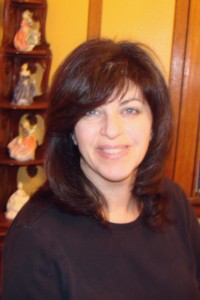
akermanheadshot-colour-2After over two decades in molecular genetics research, Beverly Akerman realized she’d been learning more and more about less and less. Skittish at the prospect of knowing everything about nothing, she turned, for solace, to writing. Of The Meaning of Children, 2010 David Adams Richards Prize winner, The Globe & Mail said, “This isn’t the invented childhood of imagination and wonderment…[here] children both corrupt and redeem: each other, family relationships and the female body.” Other recent honors: nominations for the Pushcart Prize in fiction and nonfiction, and for a National Magazine Award. Credits include Maclean’s Magazine, The Toronto Star, The National Post, The Montreal Gazette, CBC Radio One’s Sunday Edition, myriad literary and scientific journals and other publications. Strangely pleased to believe she’s the only Canadian writer ever to have sequenced her own DNA. She is seeking US and UK agents or publishers for The Meaning of Children.

Q (Meg Pokrass): Have you had mentors? Do you mentor? Talk about the mentor relationship if you will, its importance for a writer…
I consider all of my teachers/workshop leaders to have been mentors–though mentorship is really more about the one-on-one longer-term relationship. Most of the training I’ve been lucky enough to access was through a local group, the Quebec Writers Federation; I’ve taken many of their workshops, led by accomplished local writers: Colleen Curran, Tess Fragoulis, Mikhail Iossel, David McGimpsey, Neale McDevitt, Monique Polak, Lori Weber, Joel Yanofsky. I also was a­ccepted to the QWF’s formal four-month mentorship program with Robyn Sarah. At the Kenyon Writers Workshop, I worked with Brad Kessler and Nancy Zafris, and briefly with David Goodwillie; at Oregon’s Fishtrap, had a stellar experience with Luis Alberto Urrea; and at The Banff Centre for the Arts, I spent a residency working with Greg Hollingshead, Edna Alford, and Isabel Huggan. Some of these were 8-week-long interactions, others shorter or longer. It isn’t always about quantity–it’s more about intensity and emotion, whether they inspire. I’m grateful to them for their generosity, for reading and commenting seriously on my work, and those of the others in the group. Teaching is an incredible gift of oneself–knowledge, experience, sensibility, and confidence. I was invited to lead a QWF workshop for the first time last fall; it’s quite a responsibility. But my most consistent mentors/supporters/co-conspirators are my writing group: Pauline Clift, Julie Gedeon, Kathy Horibe, Maranda Moses, and Heather Pengelley. We’ve been working together since 2006. It’s incredible to have trusted people to give you feedback.
What do you do when you feel stuck or uninspired… suggestions for unblocking creativity?
I’m a big believer in getting out of your comfort zone–I’ve traveled to workshops/fellowships/residencies in Alberta, New Brunswick, Manitoba, Ohio, and Oregon. When I’m unsettled, my emotions are closer to the surface, and I highly recommend it. I’ve even written naked in the Super 8 Airport Motel in Portland–one of my favorite stories poured out there when, after a bad dream, I got up and started writing instead of turning over and trying to get a little more shuteye. I wrote for a couple of hours, made my plane and kept on writing in the stopover at San Francisco (don’t worry: I was clothed by then). Other suggestions: go to art galleries, watch movies, get in touch with nature, take long walks, ride a bike, visit your old neighborhood, join a choir, look at old photos–your own or even strangers’. Whatever it takes to stir yourself up. And work at finding things that make you happy, that make you laugh.
What inspires you?
Kindness and compassion. How much some do for others. The feeling of being in this together, the ol’ John Donne thing. Seeing kids enjoy things. My mother used to take my kids to see plays put on by a local theatre–the rapt look on the faces in the audience used to make me cry. Probably still would. Luckily, my kids are grown and I don’t have to humiliate myself in public that way quite as much anymore. But I’m still trying to move people.
Where do stories come from? What makes them happen… for you? Talk about recurring theme or themes in your own work here…
No doubt, many of my stories come from my subconscious, from unresolved issues in my own life. Preoccupations. Grains of sand that irritate and ingratiate. Recurring themes in my work include children, of course, and religion–I’m Jewish so many of my characters are, too–but one of my characters has an epiphany at St. Joseph’s Oratory, a Montreal landmark, Canada’s largest church. Again, I look for emotional triggers. Survivor guilt turns out to be a big one–that has to come from the Holocaust, where I lost half my family. Foster children are a recurring subject–I grew up with several over a 10-15 year period, and I realized after rereading the collection several times during a very compressed production schedule that I must have been pretty grief-stricken when they left to resume life with their families (or to other placements). This was all when I was quite young–to my recollection, my parents were very concerned about whether or not the foster kids were ready to move on; about the reaction of me and my sibs, not so much. Of course, memory is not objective.
How do stories grow for you?
My stories often grow themselves during the writing, like crystals coming out of solution. Sometimes I’ll start with just one idea, sometimes I’ll know the whole thing beforehand–Athena bursting from Zeus’ forehead, fully armed. I’m pretty flexible; I’ll take advice if I think the result is better (as an experiment–my old research scientist persona poking through) but I won’t alter a story for politically correct considerations. In “The Woman with Deadly Hands,” some early readers felt the ending was anti-feminist, that a woman shouldn’t be redeemed through pregnancy. To me, that wasn’t the point of the story at all: the story is about whether it’s possible to do too much reading. There isn’t a writer in the story, but it’s about writing. At least, it is to me. But I didn’t set out to write that. I horked it up like a hairball and then tried to figure out what it meant.
Can you talk about what led to the conception and creation of your collection “The Meaning of Children”?
I’d been in molecular genetics research for over 20 years, but I’d always thought I’d be a writer “some day.” In fact, one of my early delusions on enrolling in graduate school was that after the 3rd semester, I’d no longer pay per credit and so be able to take all the English courses I’d always wanted to–guess how much time I had for English or writing courses while pursuing a research MSc in genetics?
I did a lot of things in the interim–had 3 kids, worked mostly in McGill affiliated labs. And then, in 2003, my father-in-law, Gerry Copeman, died of lung cancer. Gerry and I didn’t even get along that well, though we’d made our peace. But when he died, it affected me: I understood–emotionally, as opposed to rationally or intellectually–that my time on this earth was finite, and that I’d better use it doing something I’d always dreamed of doing–writing fiction.
And so I switched gears, started taking writing and taking workshops. My first stories were published–online and in print–in 2006.
I’ve been writing and submitting like mad since then. By 2010, I had some 20+ published stories. I began submitting a collection in 2009 or so, but it wasn’t until I’d had several rejections that I realized I needed some over-riding structure. I renamed and reorganized it: there are 3 sections: ‘Beginning’ features 1st person POV children’s stories; ‘Middle’ is about those in the child-bearing years, and; ‘End’ has stories about older people, or that take the long view of life. I won the David Adams Richards Prize for a version of the unpublished collection and I think that and several other prizes–and persistence–paid off.
Are there favorite writing practices/exercises that you can share?
From Nancy Zafris, current editor of the Flannery O’Connor awards series: read Stephen Holden’s NYT review of Hirokazu Koreeda’s 1998 film, After Life and then imagine memories that you (or your protag) could take with them into eternity. The second was suggested by Luis Urrea: write about what the hands know. The two of them together led me to “Pie,” a prize-winning and much-appreciated story you can read right here on Fictionaut.
Best advice you ever got? Words of wisdom… What helped you as a young writer?
  1. Don’t be afraid of rejection, it’s a fundamental to the process. That’s a really hard one at the beginning, because many of us are trained to avoid rejection at all costs, me included. But, as the cliché goes, to make an omelet, you gotta break some eggs.
  2. Closely related: that persistence is as important to success as talent. I somewhere developed this notion that either you were a genius at something or you shouldn’t do it. Anyone who ever pursued a sport or played a musical instrument had one up on me: they already knew how much better one becomes through practice, that Malcolm Gladwell notion of the 10,000 hours. I somehow missed that lesson as a youngster.
  3. Learn to squelch the inner critic. Very hard, but start by giving yourself short holidays from it. Tell yourself you’re going to impersonate a very confident person for a while (I tend to ask myself “what would an American do?” when writing queries or asking for help, Canadians being known for being self-effacing…)
  4. Finish what you start, even if you don’t think it’s any good. See number 3 above–because it’s mostly about rewriting, carving and honing.
  5. Then there’s the standard stuff, the most important being find a writing group, and reading your work out loud while editing.
I was never really a young writer (except in my head). Advice I wish I’d gotten: don’t worry about employability (I never really made much money, anyway). Be fearless enough to do what you love (”like an American would,” lol!)
The Fictionaut Five is our ongoing series of interviews with Fictionaut authors. Every Wednesday, Meg Pokrass asks a writer five (or more) questions. Meg is the editor-at-large for BLIP Magazine, and her stories and poems have been published widely. Her first full collection of flash fiction, “Damn Sure Right” is now out from Press 53. She blogs at http://megpokrass.com.

Thursday, 17 March 2011

Stellar New Review in The Montreal Gazette & Online Interview at Fictionaut


Last Saturday featured an incredibly good Montreal Gazette review of The Meaning of Children, by freelancer Anne Chudobiak! She may just be my ideal reader...


Here's just a taste of it:

"...The Meaning of Children took on the tone of motivational reading, each story a reminder of what an optimistic endeavour it is to parent...

"The book touches on a lot of the biggest parental 'what ifs.' Kidnapping. Hate crime. Death by drowning. Suicide. Even so, it would make a good gift for a new mother. Akerman holds up our greatest fears, not to dwell on them, but to marvel at our commitment to life, especially to passing it on to others. Says one character, looking back, 'Life had been perfect … but I’d been too busy to notice.'"

The book is appearing in Canadian bookstores from Montreal to Calgary..."Only in Canada, you say? Pity."


-----------------------


My first online interview is up at the Fictionaut blog.
Many thanks to interviewer Meg Pokrass and Jürgen Fauth (pictured at right) and the rest of the folks at Fictionaut, a great place to read and share your fiction. Here's an excerpt:

What do you do when you feel stuck or uninspired… suggestions for unblocking creativity?
I’m a big believer in getting out of your comfort zone–I’ve traveled to workshops/fellowships/residencies in Alberta, New Brunswick, Manitoba, Ohio, and Oregon. When I’m unsettled, my emotions are closer to the surface, and I highly recommend it. I’ve even written naked in the Super 8 Airport Motel in Portland–one of my favorite stories poured out there when, after a bad dream, I got up and started writing instead of turning over and trying to get a little more shuteye. I wrote for a couple of hours, made my plane and kept on writing in the stopover at San Francisco (don’t worry: I was clothed by then). Other suggestions: go to art galleries, watch movies, get in touch with nature, take long walks, ride a bike, visit your old neighborhood, join a choir, look at old photos–your own or even strangers’. Whatever it takes to stir yourself up. And work at finding things that make you happy, that make you laugh.


What inspires you?
Kindness and compassion. How much some do for others. The feeling of being in this together, the ol’ John Donne thing. Seeing kids enjoy things. My mother used to take my kids to see plays put on by a local theatre–the rapt look on the faces in the audience used to make me cry. Probably still would. Luckily, my kids are grown and I don’t have to humiliate myself in public that way quite as much anymore. But I’m still trying to move people.
Where do stories come from? What makes them happen… for you? Talk about recurring theme or themes in your own work here…
---------------------------------------

Again, you can find the rest of the interview at Fictionaut.