Saturday, 25 June 2011

"What would an American do?" How I keep my "emerging writer's" career moving

I was just re-reading this interview and I thought I would post the whole thing. Thanks again, Meg Pokrass & Fictionaut!


(The Meaning Of Children now available on Kindle!)

Fictionaut Five: Beverly Akerman

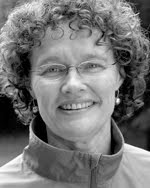
akermanheadshot-colour-2After over two decades in molecular genetics research, Beverly Akerman realized she’d been learning more and more about less and less. Skittish at the prospect of knowing everything about nothing, she turned, for solace, to writing. Of The Meaning of Children, 2010 David Adams Richards Prize winner, The Globe & Mail said, “This isn’t the invented childhood of imagination and wonderment…[here] children both corrupt and redeem: each other, family relationships and the female body.” Other recent honors: nominations for the Pushcart Prize in fiction and nonfiction, and for a National Magazine Award. Credits include Maclean’s Magazine, The Toronto Star, The National Post, The Montreal Gazette, CBC Radio One’s Sunday Edition, myriad literary and scientific journals and other publications. Strangely pleased to believe she’s the only Canadian writer ever to have sequenced her own DNA. She is seeking US and UK agents or publishers for The Meaning of Children.

Q (Meg Pokrass): Have you had mentors? Do you mentor? Talk about the mentor relationship if you will, its importance for a writer…
I consider all of my teachers/workshop leaders to have been mentors–though mentorship is really more about the one-on-one longer-term relationship. Most of the training I’ve been lucky enough to access was through a local group, the Quebec Writers Federation; I’ve taken many of their workshops, led by accomplished local writers: Colleen Curran, Tess Fragoulis, Mikhail Iossel, David McGimpsey, Neale McDevitt, Monique Polak, Lori Weber, Joel Yanofsky. I also was a­ccepted to the QWF’s formal four-month mentorship program with Robyn Sarah. At the Kenyon Writers Workshop, I worked with Brad Kessler and Nancy Zafris, and briefly with David Goodwillie; at Oregon’s Fishtrap, had a stellar experience with Luis Alberto Urrea; and at The Banff Centre for the Arts, I spent a residency working with Greg Hollingshead, Edna Alford, and Isabel Huggan. Some of these were 8-week-long interactions, others shorter or longer. It isn’t always about quantity–it’s more about intensity and emotion, whether they inspire. I’m grateful to them for their generosity, for reading and commenting seriously on my work, and those of the others in the group. Teaching is an incredible gift of oneself–knowledge, experience, sensibility, and confidence. I was invited to lead a QWF workshop for the first time last fall; it’s quite a responsibility. But my most consistent mentors/supporters/co-conspirators are my writing group: Pauline Clift, Julie Gedeon, Kathy Horibe, Maranda Moses, and Heather Pengelley. We’ve been working together since 2006. It’s incredible to have trusted people to give you feedback.
What do you do when you feel stuck or uninspired… suggestions for unblocking creativity?
I’m a big believer in getting out of your comfort zone–I’ve traveled to workshops/fellowships/residencies in Alberta, New Brunswick, Manitoba, Ohio, and Oregon. When I’m unsettled, my emotions are closer to the surface, and I highly recommend it. I’ve even written naked in the Super 8 Airport Motel in Portland–one of my favorite stories poured out there when, after a bad dream, I got up and started writing instead of turning over and trying to get a little more shuteye. I wrote for a couple of hours, made my plane and kept on writing in the stopover at San Francisco (don’t worry: I was clothed by then). Other suggestions: go to art galleries, watch movies, get in touch with nature, take long walks, ride a bike, visit your old neighborhood, join a choir, look at old photos–your own or even strangers’. Whatever it takes to stir yourself up. And work at finding things that make you happy, that make you laugh.
What inspires you?
Kindness and compassion. How much some do for others. The feeling of being in this together, the ol’ John Donne thing. Seeing kids enjoy things. My mother used to take my kids to see plays put on by a local theatre–the rapt look on the faces in the audience used to make me cry. Probably still would. Luckily, my kids are grown and I don’t have to humiliate myself in public that way quite as much anymore. But I’m still trying to move people.
Where do stories come from? What makes them happen… for you? Talk about recurring theme or themes in your own work here…
No doubt, many of my stories come from my subconscious, from unresolved issues in my own life. Preoccupations. Grains of sand that irritate and ingratiate. Recurring themes in my work include children, of course, and religion–I’m Jewish so many of my characters are, too–but one of my characters has an epiphany at St. Joseph’s Oratory, a Montreal landmark, Canada’s largest church. Again, I look for emotional triggers. Survivor guilt turns out to be a big one–that has to come from the Holocaust, where I lost half my family. Foster children are a recurring subject–I grew up with several over a 10-15 year period, and I realized after rereading the collection several times during a very compressed production schedule that I must have been pretty grief-stricken when they left to resume life with their families (or to other placements). This was all when I was quite young–to my recollection, my parents were very concerned about whether or not the foster kids were ready to move on; about the reaction of me and my sibs, not so much. Of course, memory is not objective.
How do stories grow for you?
My stories often grow themselves during the writing, like crystals coming out of solution. Sometimes I’ll start with just one idea, sometimes I’ll know the whole thing beforehand–Athena bursting from Zeus’ forehead, fully armed. I’m pretty flexible; I’ll take advice if I think the result is better (as an experiment–my old research scientist persona poking through) but I won’t alter a story for politically correct considerations. In “The Woman with Deadly Hands,” some early readers felt the ending was anti-feminist, that a woman shouldn’t be redeemed through pregnancy. To me, that wasn’t the point of the story at all: the story is about whether it’s possible to do too much reading. There isn’t a writer in the story, but it’s about writing. At least, it is to me. But I didn’t set out to write that. I horked it up like a hairball and then tried to figure out what it meant.
Can you talk about what led to the conception and creation of your collection “The Meaning of Children”?
I’d been in molecular genetics research for over 20 years, but I’d always thought I’d be a writer “some day.” In fact, one of my early delusions on enrolling in graduate school was that after the 3rd semester, I’d no longer pay per credit and so be able to take all the English courses I’d always wanted to–guess how much time I had for English or writing courses while pursuing a research MSc in genetics?
I did a lot of things in the interim–had 3 kids, worked mostly in McGill affiliated labs. And then, in 2003, my father-in-law, Gerry Copeman, died of lung cancer. Gerry and I didn’t even get along that well, though we’d made our peace. But when he died, it affected me: I understood–emotionally, as opposed to rationally or intellectually–that my time on this earth was finite, and that I’d better use it doing something I’d always dreamed of doing–writing fiction.
And so I switched gears, started taking writing and taking workshops. My first stories were published–online and in print–in 2006.
I’ve been writing and submitting like mad since then. By 2010, I had some 20+ published stories. I began submitting a collection in 2009 or so, but it wasn’t until I’d had several rejections that I realized I needed some over-riding structure. I renamed and reorganized it: there are 3 sections: ‘Beginning’ features 1st person POV children’s stories; ‘Middle’ is about those in the child-bearing years, and; ‘End’ has stories about older people, or that take the long view of life. I won the David Adams Richards Prize for a version of the unpublished collection and I think that and several other prizes–and persistence–paid off.
Are there favorite writing practices/exercises that you can share?
From Nancy Zafris, current editor of the Flannery O’Connor awards series: read Stephen Holden’s NYT review of Hirokazu Koreeda’s 1998 film, After Life and then imagine memories that you (or your protag) could take with them into eternity. The second was suggested by Luis Urrea: write about what the hands know. The two of them together led me to “Pie,” a prize-winning and much-appreciated story you can read right here on Fictionaut.
Best advice you ever got? Words of wisdom… What helped you as a young writer?
  1. Don’t be afraid of rejection, it’s a fundamental to the process. That’s a really hard one at the beginning, because many of us are trained to avoid rejection at all costs, me included. But, as the cliché goes, to make an omelet, you gotta break some eggs.
  2. Closely related: that persistence is as important to success as talent. I somewhere developed this notion that either you were a genius at something or you shouldn’t do it. Anyone who ever pursued a sport or played a musical instrument had one up on me: they already knew how much better one becomes through practice, that Malcolm Gladwell notion of the 10,000 hours. I somehow missed that lesson as a youngster.
  3. Learn to squelch the inner critic. Very hard, but start by giving yourself short holidays from it. Tell yourself you’re going to impersonate a very confident person for a while (I tend to ask myself “what would an American do?” when writing queries or asking for help, Canadians being known for being self-effacing…)
  4. Finish what you start, even if you don’t think it’s any good. See number 3 above–because it’s mostly about rewriting, carving and honing.
  5. Then there’s the standard stuff, the most important being find a writing group, and reading your work out loud while editing.
I was never really a young writer (except in my head). Advice I wish I’d gotten: don’t worry about employability (I never really made much money, anyway). Be fearless enough to do what you love (”like an American would,” lol!)
The Fictionaut Five is our ongoing series of interviews with Fictionaut authors. Every Wednesday, Meg Pokrass asks a writer five (or more) questions. Meg is the editor-at-large for BLIP Magazine, and her stories and poems have been published widely. Her first full collection of flash fiction, “Damn Sure Right” is now out from Press 53. She blogs at http://megpokrass.com.

Friday, 20 May 2011

As RT by Margaret Atwood: A Writer's Gratitude, Part 2, or Toronto Launch of The Meaning of Children (and others!)


I'm thrilled to announce the Toronto Launch of The Meaning of Children! May 31st at the Dora Keogh Irish Pub, 141 Danforth. Part of The Exile Writers Series, we will also be toasting the launch of Claude Tatilon's A Pinch Of Time (David Homel's translation of the original French novel, La soupe au pistou). The book has won many honours and sold 20,000 copies in France.

Jesus Hardwell's story collection Easy Living will also be featured, along with Ann Elizabeth Carson and Claudio Gaudio, from Exile Quarterly's 34.3 and 34.4 issues. Music by bass musician Grant Curle.


All in all, an incredible week for Exile Editions, which on May 28th will be presenting:

Exile’s Short Fiction Awards ~ $8,000 to Canadian writers!

Saturday, May 28

6:30 – 10:30 PM

Presentations by the awards’ Sponsor and Host, Ms. Gloria Vanderbilt.

$95.00 per Person ~ Advance Tickets Only / Reservation Only

Price includes assigned Table Seating and Dinner, a copy of the Carter V. Cooper Anthology that features the 10 finalists’ stories, the all-new Exile Quarterly 35.1 (plus a one year subscription), and five $2.00 “free” bets and race guide per guest to play the horses. We will also have available Gloria Vanderbilt’s new collection of stories The Things We Fear Most.

We Honour the Three Winners:

$3,000 ~ Frank Westcott for The Poet

$3,000 ~ Silvia Moreno-Garcia for Scales as Pale as Moonlight

$2,000 ~ Ken Stange for The Heart of a Rat


Click here for a PDF of the Invitation in full, and Complete Menu:

May 28 2011.

To make your Reservation, or for additional information, email us at: Event Information and Reservations (the.exile.writers@gmail.com)


Way to go, EXILE!


Thursday, 19 May 2011

On being edited...


An emerging writer lives on a high wire, where self-confidence—the bulwark against frequent rejection--counterbalances humility, because who doesn't have a lot to be humble about? The struggle to maintain equanimity was never more obvious than the first time my work was edited seriously.

I'd had over 20 stories published, most without even a comma displaced, so I was shocked when a publisher returned my fiction collection covered in chicken scratchings. The putative editor, a prizewinning author in her own right, was much younger than me, and had a Google-invisible editing history.
After a week or so, I finally forced myself to flip through the thing. And it was worse than I'd feared! For instance, “Montreal” and “Quebec” had morphed to “Montréal” and “Québec.” My first story, a prizewinner itself, took place in the late '60s in anglo Jewish Montreal, where Jeanne Mance’s given name was pronounced like a synonym for dungarees...and this Torontonian had shtupped in all those aigus? Were all her other corrections equally ill-informed?

When in doubt, do nothing, I decided. Besides, the publisher had offered me bupkis, contract wise.

A few more rejections passed. I finally calmed down, read the edited manuscript, and contacted the publisher: they were only suggestions, he said. Use those that seem useful and forget about the rest. Ultimately, I realized most of her changes were printer’s instructions, and several of her propositions were sound. So, I followed them and found the result an improvement. Perhaps I’d been skimping on the humility side of my balancing equation.
Editors can't turn a sow's ear into a silk purse; but hand them raw silk and you may get a better story altogether.
###
Canadian Beverly Akerman started writing fiction in 2005. Her first book, The Meaning of Children (Exile Editions), was just released to critical acclaim: “Each story [is] a reminder of what an optimistic endeavour it is to parent…Akerman holds up our greatest fears, not to dwell on them, but to marvel at our commitment to life, especially to passing it on to others.” Anne Chudobiak, The Montreal Gazette.

(Originally published in QWrite, a publication of the Quebec Writers' Federation.)

Friday, 13 May 2011

PIE


Some folks say your hands can tell the story of your life. Well, my hands cain't talk, but they've made so many pies, I bet they could do it themselves if you cut 'em off and gave 'em the right ingredients, I sure do.
'Course, I ain't made pie in going on forty years now. But for me, pie's like ridin' a bike: it's something I'll never forget.
It's the crust ever'one frets on. You got to measure out two cups of flour exactly, and a teaspoon salt. Eamon liked to tease me about this. He'd say, “Been making pie long?”
And I'd go, “My whole life entire.”
And he'd say, “And you still measuring?”
There's things I did by feel. Mothering, for instance. Baking, I measured.
Mix that flour and salt in a bowl. I always used my largest, white with blue stripes round the side. A wedding gift from my Mama, come in a nested set, three different sizes. Like him and his two brothers, Eamon liked to say. Then cut in a cup of Crisco with a pastry blender, looks sort of like a small harp. When he was young and still in the kitchen, Eamon'd play on it a time or two, just to show me. You got to work that fat in real good, blend it, all the way through. The recipes say “till it looks like small peas,” but that ain't nowhere near enough. I pity the woman what tries to make piecrust from the recipe on the side of a tin of Crisco, I sure do. You got to mix it in completely. Stop too soon, all you got's lumps of fat with flour on the outside. Never get a piecrust out of that. Get it right and it clumps up on its own. More you mix, the bigger they get. Pea-size ain't near enough, no sir. Needs to be lima beans. Bigger, even.
Then add your water, a tablespoon at a time. Mix well after each one. Four tablespoons in all, that's a quarter cup. Less sometimes, if it's real humid.
It was the day that Eamon left, ever'body's clothes sticking to 'em like a second skin.
Well.
Dust your hands with flour, make the dough into a ball. Knead it a bit if you like, just to be sure. And don't pay no never mind to them that says too much handling'll make that pie crust tough. You don't got to worry about that at all, uh-uh. The more you handle it, the better.
Babies are like that, too. Folks think you spoil 'em, picking them up whenever they cry. But some babies need it. They just have to feel your hands on 'em. You can carry them around with you all day if you have to. No sir, if it's one thing I know, holding them close is the making of men, not the ruining.
Next, you roll out that dough. Cut it in two. Plunk half on a piece of wax paper and dust it with a little flour, soft as talc. Cover with more of that wax paper, a little flour to keep that from sticking, too. A bottle of pop will do in a pinch if you don't have a rolling pin. Roll it thin, peel the top paper off, and take the bottom with the pie crust on it and flip it into a pie plate. Peel the paper off real careful-like, but don't pay no mind if it tears--just dip your fingers in some flour and press it right back. Mends it up and no one'll ever know the difference. But you can only compare a boy and a pie so far.
Put the filling in, roll the other crust out, too, and put that on top. Crimp the sides together real good so it don't leak none and cut some slits on top, for the steam.
Bake it, four hundred-twenty-five degrees, forty-five minutes to an hour, depending what-all's inside.
Best pie I ever made? Oh, that was on an early summer day, like I said, more'n forty years ago now. Ain't never made another. Promised myself I wouldn't, not till he come back home.
Well.
I remember it like yesterday. All of us smiling and laughing, talking and talking about nothing really, no sir. Eamon was like a brand-new penny that day, shining, handsome, everything before him. Telling me how much he loved me and respected his daddy, the two of them clapping each other on the back every time they was in spitting distance. Eamon even said he loved his germy younger brothers, punching them in the shoulder all day long, and then hugging them tight, just the once. His daddy was so proud of him. Funny how a suit with brass buttons can make a man lose all sense.
“It's an honour to serve,” Eamon said. And I knew what he meant, I surely did.
The whole family was there, uncles and aunts, cousins, friends and neighbours, too. Even the Mayor, like it was some goddamn Fourth of July. We laid on a barbeque, just the way he liked it—ribs, cole slaw, potato salad, devilled eggs, corn on the cob, biscuits, watermelon, and of course his favourite, rhubarb pie. Made four of them that morning. Ever'body said I made the lightest crust around. Like I told you, the trick is to work it enough, to get everything mixed in just right.
Women often fail at pie because they give up too soon.
I brought it out to him, still warm from the oven, ice cream on the side. Eamon liked it that way, the tart bleeding into the sweet.
The light from the sun slanted long and low.
“If anything happens,” he said.
And I hushed him, wouldn't hear it. Just wouldn't. I told him, “You finish that pie, now. Your ice cream's melting in the heat.”
(A story from my award winning collection, The Meaning Of Children, also available as an e-book; "Pie" originally published by Gemini Magazine. Winner of their first Flash Fiction Contest)

More about The Meaning Of Children:
 

Monday, 9 May 2011

The Meaning of Children: on CTV Montreal with News Anchor Mutsumi Takahashi

A couple of weeks ago, Mutusmi Takahashi graciously invited me onto her lunchtime news show. We discussed my new book, The Meaning of Children, which she liked very much. Please watch the interview here or find it on Youtube.


Sunday, 8 May 2011

The Meaning of Children: on Radio CJAD AM 800 with Anne Lagacé Dowson


On Saturday, April 30th, I was interviewed by Anne Lagacé Dowson on her Saturday afternoon show on Radio Station CJAD AM 800 (that's Anne on the left!).

Ms. Dowson was extremely complimentary about The Meaning of Children, which she called an "antidote to the commercialized side of Mother's Day." She called me brave for my story about abortion, "Like Jeremy Irons," and said the book pulls no punches in capturing how challenging parenthood can be.

She said many other fine things about the book. Watch it here


Or mosey on over to Youtube and have a listen...


Tuesday, 3 May 2011

Students help Rwandan genocide survivor


The Rwandan genocide still slashes through the lives of its survivors, including Concordia student Beatha Kayitesi (BA ’11). But community support can bring opportunities for great healing.

Kayitesi survived the genocide and other atrocities that killed 800,000 Tutsi and pro-peace Hutu in approximately 100 days in mid-1994. This year, she was a student in Madeleine Mcbrearty’s Health Promotion class (AHSC 460) in the Applied Human Sciences program. Kayitesi’s mother raised over 20 community orphans, people Kayitesi considers brothers and sisters. Kayitesi ended up coming to Canada via refugee camps in Kenya and Sudan. “Being one of the survivors, I have a big responsibility to help those who made it but were not as lucky as me.”

But she lives, at times, with feelings of shame coupled with survivor guilt. Last year, her sister Ernestine appealed for help Kayitesi was in no position to provide. “She married the wrong guy, someone who had killed over 2,000 Tutsis. Nobody knew this,” says Kayitesi. He killed Ernestine, and then himself. “They left a few kids behind.”


So when her mother called recently, begging for help for another sister, Vivian, also married but “still hungry and at the end of her rope,” Kayitesi knew the best solution would be to get her sister back in school. But who could afford the $500 yearly fee? Enter the students of her Health Promotion class.


AHSC 460 is “about the seven dimensions of health: physical, emotional, spiritual, mental, social, environmental and occupational,” Mcbrearty says. Students are asked to change two dimensions of their own health, working on issues as diverse as cigarettes, drugs, drinking, debt loads or savings, composting, or focusing on anger or self-esteem issues. It’s a full year course, “very experiential. Learning to change the world by changing yourself is a big component of this course.”

During the second-to-last class, Kayitesi performed a Rwandan dance “she did it to make herself feel better,” says a classmate, Rachel Renaud (BA ’11). Everyone was touched to see her so transformed. Kayitesi knew that AHSC 460 students were supposed to share what was going on in their lives, so she finally told classmate Matthew Riggs about her sister’s situation. “When I told Matthew my feelings, that I would just like to help one person, Matthew told me I deserved to be happy. I’ve never been a really happy person, the kind who goes to dances and parties.”


Riggs asked his classmates to each bring $15 for Kayitesi’s sister. “I felt they would think I was asking for myself,” Kayitesi says. Instead, Renaud, Executive Director of the Renaud family’s Roasters Foundation and all their philanthropic work, arranged for matching funds. Another student, Kelly Wilkinson, works with Big Brothers Big Sisters, and got help from her co-workers there.


At the final class, Kayitesi invited dancers and drummers in Rwandan costume to perform again, this time as a thank you. “We raised $1,400 with more coming in, enough to start an official program with the Foundation,” Renaud says. And enough to keep Kayitesi’s sister in school for three years.


The experience was “wonderful, amazing. I didn’t know they would be there to help me,” Kayitesi says. “I’ve slept well since.”


Originally published in the Concordia Journal.