Showing posts with label interview. Show all posts

Monday, 25 February 2013

Of sock puppets & PQ demagoguery: Beverly becomes CBC "go to" person on living in English in Quebec


Just thought I’d let you know of my appearances on CBC Radio’s Daybreak last week and CBC TV News, discussing whether or not English-speakers feel welcome in Quebec. It was part of their ongoing “Living English” series, covering results of an EKOS poll on Anglophones in Quebec.


“Panel of Anglos echo EKOS poll results about belonging”: "Speaking on CBC Montreal’s Daybreak, two anglophone Quebecers echoed the EKOS research poll results which found that 58 per cent of respondents feel welcome in Quebec and 57 per cent feel integrated into Quebec society…” 

You can listen to the interview here:

More on their radio series "Living English"


To come: I was interviewed for a segment on CBC Radio's “C’est la vie.” I think it will be out this week.

Big thanks to Mike Finnerty, Joanne Vrakas, Alison Cook and all their researchers and associates. An inspiring group who are always trying to do more with less.

Monday, 24 December 2012

The Meaning of Children featured today on The Jewish Daily Forward

Very excited to be featured TODAY on The Jewish Daily Forward! Thanks so much to Renee Ghert-Zand (whom, I discovered as we Skyped, is a former Montrealer!) for the great Q&A on The Sisterhood Blog.

Here's the start of the piece:


Q&A with Scientist-Turned-Novelist Beverly Akerman

By Renee Ghert-Zand


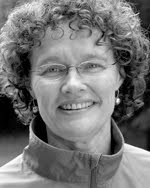
Beverly Akerman

For most of her adult life, Beverly Akerman was a molecular genetics researcher at McGill University and the Montreal Children’s Hospital. But in 2003, after several years of feeling an underlying malaise and professional unhappiness, she decided to make a mid-life career switch. Following dreams she set aside for 20 years as a busy working mother of three, Akerman became a fiction writer. She published her first short story in early 2006, making her the first Canadian fiction writer ever to have sequenced her own DNA.

Akerman, a 52-year-old lifelong Montrealer, has published more than 20 stories to date, 14 of which are included in a 2010 collection titled, “The Meaning of Children.” Her fiction has appeared in Canada, the U.S. and Germany and has received numerous recognitions, including the David Adams Richards Prize, the J.I. Segal Award, nominations for a Pushcart Prize, and a place among the CBC-Scotiabank Giller Prize Readers’ Choice Top 10. Akerman spoke to the Sisterhood about her book, her hometown, her Jewish identity and her aversion to happy endings.

THE SISTERHOOD: All of the stories in “The Meaning of Children,” except for one, are written from the perspectives of girls or women. Do you generally only write from the female point of view?

BEVERLY AKERMAN: I’m a strong feminist and I don’t think that there are enough women’s stories told. Literature is full of women’s books, but not these kinds of stories… There are things that girl children go through that are interesting to me. I do have more stories now that are written from a male point of view, but I intended to write from a woman’s point of view.

To what extent are these stories autobiographical?
The child stories come from things that bothered me in my past. They were not maybe literally things that happened to me, but they were drawn from certain images from my childhood. In some cases, there are experiences of mine and of people I know in the stories. For instance, I do write a lot about foster children, and growing up my parents did take in foster children. Writing about foster children has been a kind of my way of saying goodbye to them. I think my parents were, at the time, more concerned about the foster children re-integrating with their families than with what it was like for us to part with these children after having shared a life with them.

The collection is divided into three parts — Beginning, Middle and End — and each one corresponds to a major life stage. Do you feel more comfortable writing about one of those stages?


Friday, 21 September 2012

The Meaning of Children: Latest interview, at Inspiration Forum UK

From Inspiration Forum UK, September 2012

Thank you, Fiona McVie!

Those books aren't just going to read themselves, you know...
Our Interview with Beverly Akerman 
 
Name Beverly Akerman

Age North of 40, south of 60. Okay, you win: I’m 52.

Where are you from? Montreal, Quebec, Canada.

A little about your self ie. your education, family life, etc.
Born and raised in Montreal. In fact, I’ve never lived anywhere else. Sometimes I feel a bit bad about that, like it’s a character flaw or something. I have three kids well on their way to being grown-up. One moved out of the house to live on his own just this summer…and it was my middle guy, the one who’s always been easiest to get along with and the most helpful. (Or maybe it just seems that way; hindsight, rose coloured glasses and all that. Still, he was the only one of the three who used to point to his bed at night when we’d be rocking him in the rocking chair. He did like his sleep!) My husband is still here at home with me. I’m happy about that, actually. He worked in politics for many years, while our family was young. So I worked full-time, mostly, and single-parented it half the time.

I was busy and exhausted, so over-programmed that I don’t have all that many memories of that period. Why do we do this to ourselves? I suppose you’ve heard the saying, “Of course women can have it all: just not all at the same time.”

I have BSc and MSc degrees in biology from McGill University and worked for over 20 years in molecular genetics research. But I’d always known I’d be a writer some day. (At least, I’d always wanted/intended/hoped to be a writer some day…)

Fiona: Tell us your latest news?
I just had my longest ever giveaway on Amazon for the e-version of my award winning short story collection, The Meaning of Children, and it went really well. Over 4300 downloads, which I think is amazing for literary fiction. And the reviews—from periodicals as well as “real” readers-- are absolutely incredible as well. Words like “luminous,” “illuminated,” “haunting,” “a life-altering read,” “profound,” “a book of rare sensitivity and masterful creative writing”…You’d have to look on the Amazon.com book page to see them (it hasn’t quite caught on yet in the UK, I’m afraid) and on my blog.

Here are some links:
http://www.amazon.com/The-Meaning-of-Chi...B007H067R6
http://www.amazon.co.uk/The-Meaning-of-C...B007H067R6
http://beverlyakerman.blogspot.ca/p/rad-...aning.html

Fiona: When and why did you begin writing?
I'd always thought I'd be a writer some day. My first publication was a poem that won an honourable mention when I was nine and a half years old, something I wrote about in The Rampike last year, in the creative nonfiction piece "Aversion Conditioning, or Why I am Somewhat Conflicted About Poetry.” But I guess my imagination-my self confidence?-failed me because I could never seriously picture myself as a writer. So I put it aside, joked about needing to live life first in order to have something to write about (though maybe that isn't a joke), and tried to prove something (though exactly what and to whom I'm not quite sure) by distinguishing myself in math and science, the subjects everybody else seemed to think were the hardest.

I'd been keen on genetics since first learning about it in high school and in grade 10, when we were offered testing for Tay Sachs disease carrier status and one of my friends tested positive, I was well and duly hooked on DNA.

I majored in biology (human genetics) and went on to graduate work in genetics, where one of my most cherished delusions was that, once I finished the residency requirement and no longer paid by the credit, I'd be able to take all the English and creative writing courses I'd always dreamt of.

Guess how much time I had for non-science courses while pursuing a research degree in genetics?

That's right: none.

By 2003, I'd been in science for over two decades, mostly in McGill-affiliated labs. I'd been fairly successful, writing or co-writing 19 papers, mostly on mutations associated with several rare diseases. I also had a life--three kids and a husband who made a career in politics. But a funny thing happened as I waltzed through the genomes: the work had started to lose its meaning for me.

Something was wrong, I just couldn't put my finger on what, exactly.

And then my father-in-law, Gerry Copeman, died of lung cancer.

Gerry and I didn't even get along that well, although we'd made our peace, especially after the grandchildren arrived. But when he died, it affected me deeply, beyond the sadness of losing someone so close. For the first time, I understood-emotionally, as opposed to rationally or intellectually-that my time on this earth was finite, and that I'd better use it doing something I'd always dreamed of doing.

Which turned out to be, once I spent some time trying to figure it out, writing fiction.

So I switched gears, started taking writing workshops-the Quebec Writers' Federation has been stellar in providing learning opportunities for someone like me, unsure if she wanted to go back to university (and, more importantly, not convinced it would be helpful to have roomsful of young strangers tear up her work). I've been writing and submitting like mad ever since.

My first stories were published-online and in print-in 2006. Within a few years, I'd published more than 20 stories-in anthologies like the Aesthetica Creative Writing Annual 2012 and Best New Writing 2011, as well as literary journals and won or placed in a slew of contests. Links to my stories available online are on my blog. But let me direct you to a favourite of mine (and of my readers), “Pie.” It’s about love and loss, motherhood, baking, childrearing, and war.

And you can read it here:

http://beverlyakerman.blogspot.ca/2011/05/pie.html

Fiona: When did you first consider yourself a writer?
I’ve probably always considered myself a writer trapped in a non-writing body…but I remember when I won the Fog City Writers Fiction Contest…I opened the email and screamed. Hubby came running, thinking someone had died. But it was just that I’d won a $1,000 prize. I think that was the moment when I thought, “Okay, it’s not my imagination, this really is good work.” That was October 10th, 2007 (I had to look it up).

Fiona: How did you come up with the title?
I’d read somewhere that bestsellers were typically titled “The noun of noun” and so I played with that. The thing is, when I sat back and looked at the pile of stories I’d writing, the theme of children wasn’t hard to spot. I also realized, after submitting the collection for a while and getting nowhere with it (I am extremely impatient about such things) that I needed to have an overall structure to the book. So I thought about it some more and realized I could divide the book into “beginning”—stories from a child’s point of view—“middle”—about those in the child bearing years--and “end”—about older people, or stories that take the long view of life. And pretty soon after that, it was accepted for publication in Canada by Exile Editions.

Fiona: Is there a message in your story collection that you want readers to grasp?
You know, I think about that from time to time. There are 14 stories and I’d say that each of them has its own message and meaning, which may differ from reader to reader (and reading to reading). That’s what makes them literary, I guess.

I think one of the overall messages of the collection is about noticing those small moments of growth and insight, and that being a kid can be hard. Being a grown-up can be hard, too. And being a parent, a mother…well, let’s just say I wanted to shine the light on some feelings that are deep but not that much discussed. And they aren’t all dark, but some of them are.

Fiona: How much of the book is realistic?
Much of the book is quite realistic but I do have one story, “The Woman with Deadly Hands,” which, as you can tell from the title, is a bit of a fairy tale. But it’s a fairy tale for grown-ups. There’s sex in it, homosexuality, a deep dark secret, and a HEA ending (for happily ever after). Many of the themes, in fact, are similar to those in Fifty Shades of Grey, which is one of the reasons that trilogy appealed to me, though I don’t write soft porn. Probably more lucrative if I did!

Fiona: Are experiences based on someone you know, or events in your own life?
I tell everyone that the book is fiction. My kids always roll their eyes (or smirk, or both!) at that. So I’d have to also say some of the stories are based on real events in my own life, or those of people I know. But if real life is the basis of a story, I still take it and move it beyond the quotidian. Something has to happen to that interesting character, IMHO. Or it’s not really a story.

Fiona: What books have most influenced your life most?
As a writer? Mordecai Richler’s Barney’s Version is pretty much perfect, in my view. It’s largely about Montreal, it features characters brash and larger than life, it’s a book about the love of a man for his wife and children, it’s poignant and moving and very, very funny. A writer at the top of his game. If I could write something that had all that—humour, love of family, poignancy—I’d consider myself a success.
One of the things that means the most to me about it is that it’s about the love of a Jewish man for his Jewish wife…which is a kind of long story for me. Let’s just say that most male Jewish authors do not write about lovely and lovable Jewish women. If you like, you can read up on that here:
http://roverarts.com/2010/12/mordecai%E2%80%99s-women/
and here (because that was one of the few changes in the story when it was turned into film)
http://roverarts.com/2011/01/mordecai%E2...not-quite/

Other books that are important to me: Morley Callaghan’s The Loved and the Lost. I was very young when I read it and it impressed me immeasurably because it showed me my own home, Montreal, could be the setting for an important novel.
Then there’s the usual: Catcher in the Rye, To Kill a Mockingbird, both of which I re-read recently. The latter astounded me: these are books that are usually required reading for pre-teens here in Canada. So to discover that To Kill a Mockingbird was as much about parenting as about racism was a real eye-opener.

More recently, I’ve really enjoyed Lionel Shriver’s fearlessness in We Have to Talk About Kevin, and Michael Chabon’s tour de force The Amazing Adventures of Kavalier & Klay.

Fiona: If you had to choose, which writer would you consider a mentor?
I don’t think I could choose just one…there’s Colleen Curran, a playwright I’ve been studying with for the past few years. She is just incredibly motivating and supportive, and a wonderful all round bubbly person. She is a sucker for comedy and happily ever after (see her play Cake Walk or her novels, e.g. Something Drastic) but she has also written much more serious work (El Cladavista, Sacred Hearts).

Then there’s Neale McDevitt; I took writing workshops with him for about 18 months. He has a wonderful book of short fiction, One Day Even Trevi Will Crumble, quite a prescient title because I recently read that the fountain was out of commission for awhile after several chunks of it had broken away. Other writing teachers of who really stand out in my mind: Luis Alberto Urrea, and Nancy Zafris.

Fiona: What book are you reading now?
Right now I’m reading Half of a Yellow Sun by Chimamanda Ngozi Adichie for book club and really enjoying that.

Fiona: Are there any new authors that have grasped your interest?
All of them. Martin Crosbie, author of My Temporary Life, for example. Poet Samuel Peralta who is new to me, anyway. I’m learning so much on this indie experiment of mine.

Fiona: What are your current projects?
I’m still trying to figure out how to write a novel. I know how to start them, no problem. It’s keeping them going…that’s what I have to work on. I also have a couple of plays on the go.

Fiona: Name one entity that you feel supported you outside of family members.
Oh, there are many of those! An entire alphabet soup of initials: PWAC, for the Professional Writers Association of Canada, which helped me earn a (bit of? Modest?) living as a freelance writer; the QWF (Quebec Writers’ Federation), which made all the lovely writing workshops available for modest fees, the WFNB (Writers Federation of New Brunswick) for running the David Adams Richards Prize Contest, and; my Canadian publisher, Exile Editions.


Fiona: If you had to do it all over again, would you change anything in your latest book?
Yes: I wouldn’t have worried so much about no one wanting to publish it. I wouldn’t have said “yes” to the first offer; I would have investigated what a publisher was willing to do for me. I would have had more faith in my own talent.

Fiona: Do you have a blog/website? if so what is it?
http://beverlyakerman.blogspot.ca/


[Image: 302szde.jpg] [Image: 18iq9f.jpg]

Wednesday, 4 April 2012

Lionel Shriver & Me on Goodreads (!)


This morning, my inbox at Goodreads 

yields 

this little gem:


from: 603238   Jessica Donaghy
to: 4576986   Beverly Akerman
subject: Lionel Shriver
message: We selected your question!
You can read the full interview here:
http://www.goodreads.com/interviews/show...

Thanks for participating!

Jessica


My response? 

Pure valley girl*: 

OH WOW!

(*St. Lawrence Valley, that is...
not a lick a silicon in these hills a mine)  

Yes, possums, my qqquestion??? was selected 

to be put to 

the brilliant, 

the ballsy 

(the ovariesy? not to be confused 
with the over easy ....but I digress), 

the incandescent and

INCOMPARABLE

LIONEL SHRIVER  


Find the entire Goodreads interview here. 


The snippet with my question & Ms. Shriver's answer:

"GR: Goodreads Author Beverly Akerman asks, "What can we do to help make sure women writers and the tastes of women readers are not systematically discounted and disparaged?"

LS:
One of the bizarre things about recent times and this whole phenomenon of "most fiction readers are women" is that we have somehow flipped that around to being insulting to women. "Oh, those women, they just have a bunch of time on their hands?" In the olden days, literature was a man's pursuit, and women shouldn't worry their pretty little heads about it. It was about serious, philosophical issues and grand drama, and literature was a man's world and a man's concern. And now that it is a woman's world and a woman's concern, it's considered kind of pathetic. Nobody in publishing ever says that, but there is definitely an element of condescension going on here. I am also insulted by the way publishers feel they have to package fiction now. It all has to be girlified. It has to have women on the front, which defies the statistics that women don't have to read about women—women are interested in reading about everybody. I'm in despair about what we can do. And the other problem is, the really heavy hitters—and this is worse in the U.S. than here in the UK— the writers who are trotted out as the voices of their generation are always men, and I don't know how to crack that. That nonsense The New York Times Book Review did with Franzen? They'd never do that with a female author. I'm at a loss. All I know to do is to write the best books I can. And women readers need to get it across to publishing companies that they don't want to be patronized—they don't want to be patronized in packaging, and they don't want to be patronized in content."

***

Thank you, Lionel Shriver! Keep on speaking truth to power: we women make up the majority of readers and writers. We are the publicists and the interns, the reviewers and the book store employees. 

WOMEN ARE PUBLISHING:  

PAST, PRESENT, AND FUTURE!

IF YOU'RE A PUBLISHER WHO WANTS TO HAVE A FUTURE, REMEMBER THIS! 

STOP DISCOUNTING US, 
OUR HOPES, DESIRES, & CONCERNS.

Fifty Shades of Grey is just the latest example...

WE ARE THE MARKET!

ignore/talk down to/diminish us 

at your peril. 

 We won't be ignored or marginalized. 

We vote with our Kindles, and Kobos, iPads, Androids...etc. 

Speaking of which: 

where 

is the 

FEMDROID?!(;-)

 Here's hoping we can work this out, 

as we always have...and to everyone's 

mutual advantage.


The Meaning of Children  on Amazon.com


"Emotional and tightly written, with a resistance to the happy ending, and the idea there is often something or someone waiting for the small mistake."

~TWUC Short Prose Competition Jury, commenting on 
"The Mysteries," a short story from The Meaning of Children


Wednesday, 1 February 2012

The Meaning Of Children: on Mother's Day and Abortion


Just listening once more to my interview with the lovely, charming, and whip smart Anne Lagacé Dowson, a wonderfully generous interviewer and person. And I came across this discussion near the end about motherhood, feminism, abortion, and mother's day that I'm really happy with...she made it so easy to talk with her and I'm really grateful to her and to everyone who took the time to help nurture my little book...so here's a transcript of part of the interview, and I'll post the Youtube video below. 


Hope you enjoy and find some food for thought here. And, of course, in The Meaning Of Children!

Anne Lagacé Dowson


BA: ...As feminists coming of age in the ‘60s and ‘70s, we were so keen on making the best of all the opportunities that had been denied us for generations that I think we bought into the idea that teaching and nursing and mothering and care giving are lesser occupations. And of course they aren’t. They’re very, very important to all of us, especially as we age and become more and more dependent on caregivers. So I just am hoping partly to honour that fact of women’s lives.

ALD: In time for mother’s day. So if you are casting about for the perfect mother’s day gift, this might be it. The book is called The Meaning Of Children by Montreal author Beverly Akerman and it’s a collection of 14 short stories which sort of covers the range of experience from the point of view of children, Mums, and also aging parents as well. It’s all there in this lovely little book…short stories about life in a family that might just resemble yours…

You do make a lot of Montreal references in some the stories…and it’s very fun to read stories based and rooted in Montreal…lots of references to the Jewish community and family practices and so on…

What’s your sense of how your feminism has coloured the stories?

BA: I think it definitely has coloured the stories. There’s a story about abortion…I’m a prochoice feminist. It’s a very hard decision for a lot of people but I’m still glad that it’s a decision that is ours to make and not some external group trying to run our lives…

ALD: I thought that was a very brave story, actually, that you wrote. Because I think you’re writing about something that a lot of people have experienced but still feel very badly about talking about. It’s not out there in the civil discourse or in the public discussions of what family life is about.

BA:  I don’t think people feel comfortable acknowledging that they have had an abortion or that they’re related to someone who has. It’s still a very private family matter…

We’re very, very lucky to have grown up in the era in which we have where we do have so many more options than our mothers and grandmothers had. And we have to protect those options for the future generations. I think that’s very important too.

ALD: What will you be doing on mother’s day?

BA: I guess going to brunch with my parents! I’m lucky enough to have both my parents so…and getting cards and kisses from my kids.

ALD: And flowers, hopefully. That’s always a nice feature of mother’s day. But really, mother’s day should be each of our respective birthdays in some sense. You were speaking about some family member…

BA: My father-in-law thought on your birthday you should go and honour your mother because she went through so much. And he would know, he put his parents through a lot.

ALD: Well, we all do. Anyway, I wanted to congratulate you on the publication of this book and I hope it goes far, far afield for you.

BA: Thank you very much. I hope people enjoy it.

ALD: A wonderful gift for mother’s day, perhaps more long lived than the usual cut flowers...


Wednesday, 10 August 2011

Beverly Akerman Interviewed by CBC HomeRun's Jeanette Kelly


The Meaning Of Children now available on Kindle!


Today was the day...CBC Montreal's HomeRun reigning summer queen, Jeanette Kelly, interviewed me for the program. We talked about motherhood, meaning, and The Giller Prize Reader's Choice Contest. (Feel free to suggest The Meaning Of Children be part of the longlist!!)

Jeannette asked for tips for would be writers--I told her writers should be relentless in pursuing their art and their success, and that they should continuouslyask themselves WWAAD--"What would an American do?"

I talked up the Quebec Writers' Federation and Ilona Martonfi.

I read from "Pie."

All in all, a vibrant, action-packed segment.

See if you agree:


And then, my car sorta died...but at least it happened on the way home from the interview and not on the Ville Marie Expressway, eh? ;)

Find HomeRun on Facebook or at their website here.


Monday, 9 May 2011

The Meaning of Children: on CTV Montreal with News Anchor Mutsumi Takahashi

A couple of weeks ago, Mutusmi Takahashi graciously invited me onto her lunchtime news show. We discussed my new book, The Meaning of Children, which she liked very much. Please watch the interview here or find it on Youtube.


Sunday, 8 May 2011

The Meaning of Children: on Radio CJAD AM 800 with Anne Lagacé Dowson


On Saturday, April 30th, I was interviewed by Anne Lagacé Dowson on her Saturday afternoon show on Radio Station CJAD AM 800 (that's Anne on the left!).

Ms. Dowson was extremely complimentary about The Meaning of Children, which she called an "antidote to the commercialized side of Mother's Day." She called me brave for my story about abortion, "Like Jeremy Irons," and said the book pulls no punches in capturing how challenging parenthood can be.

She said many other fine things about the book. Watch it here


Or mosey on over to Youtube and have a listen...