Showing posts with label Exile Editions. Show all posts

Monday, 8 April 2013

Self-publish your way beyond obscurity


I’ve decided to give away the e-version of my award-winning collection of short fiction, The Meaning of Children  - well, for a couple of days. The paperback, released in 2011 by Exile Editions, officially sold about 365 copies. At $2 per $19.95 list priced copy, I’ve earned about $730 in royalties from Exile’s publication, which doesn’t include the proceeds from the approximately 200 copies I hawked myself, or the $150 they paid me to publish one of the stories in Exile Quarterly. Somebody else—many somebodies—pocketed the remaining $12 to $18 per copy…or over $6500.

The economics of publishing, especially considering the hours put in writing, editing, re-writing, etc. are enough to make a grown writer weep.


In March 2012, posting on The New Quarterly’s Facebook page, I encountered Martin Crosbie, self-published sensation, Amazon.com poster-writer who earned $45,000 in royalties in February 2012 alone. I decided to self-publish the Kindle version of my book (to which I had luckily retained the rights).

It cost me nothing to self-publish (except for the commissioning of a new cover; Exile wouldn’t let me use theirs) and took about five minutes to accomplish. The self-published ebook, available exclusively on Amazon since March 2012, has been downloaded nearly 7,000 times. From this, I’ve earned about $500. So far.

I also wrote an article about Martin’s success and contrasted it with my own (“How to become an e-book sensation. Seriously”), published in The Globe and Mail Books section. The article was in the top 10 for its section for months.

As Martin and other successful indie writers, notably Robert Bidinotto, stress, the key to generating interest in your self-published book is to use Amazon’s Kindle Direct Publishing’s primary promotional tool: five free giveaway days per three-month period your book is exclusively available with Amazon.

The point of exclusivity? The free days, and the opportunity to be paid for allowing them to lend your book to their huge bank of subscribers, Amazon Prime members. For an annual fee, Prime members benefit from a number of advantages, including borrowing a book a month from the KDP collection. Some authors generate mucho dinero from these loans, especially genre writers: because genre readers need their fixes real regular-like. Over $2 per borrow, on average. For Martin Crosbie, this translated to thousands and thousands of downloads and dollars.

Giving away your book is an indispensable promotional tool. Many websites, Twitter accounts, and Facebook pages exist primarily to promote freebies. And thousands of free downloads rockets your book up the Amazon sales charts, which piques reader interest, generates those all-important reader reviews, and results in subsequent sales. Hopefully.

As Martin told me, “The rule of thumb is: For every three you give away, you’ll sell one. So give lots away!” Indie authors must be open, generous and giving. Remember, we’re channelling Oprah here.
Despite my modest success with self-publishing, I don’t suggest litfic writers take this route: my book won prizes (many prior to the book’s publication, and a couple, e.g. the J.I. Segal Award, as a result of being traditionally published). The traditional routes to recognition and sales—newspaper and magazine book pages—are sadly still unavailable to self-published authors. Of course, there’s a reason for this: many self-published books are pure dreck.

In any event, if your self-published book doesn’t manage to do as well as Martin’s My Temporary Life, you can always tell yourself it’s because

a. it’s not a genre novel, or

b. Amazon has changed their algorithms.

Hell, that’s what I do…

Beverly Akerman’s The Meaning of Children hit #1 on Amazon's Kindle Women's Fiction, Literary Fiction, & Short stories lists in her most recent giveaway (Nov. 2013), rising to #51 on their list of over 1 million books.

This article originally published on Montreal's arts and culture online magazine, The Rover.

Monday, 24 December 2012

The Meaning of Children featured today on The Jewish Daily Forward

Very excited to be featured TODAY on The Jewish Daily Forward! Thanks so much to Renee Ghert-Zand (whom, I discovered as we Skyped, is a former Montrealer!) for the great Q&A on The Sisterhood Blog.

Here's the start of the piece:


Q&A with Scientist-Turned-Novelist Beverly Akerman

By Renee Ghert-Zand


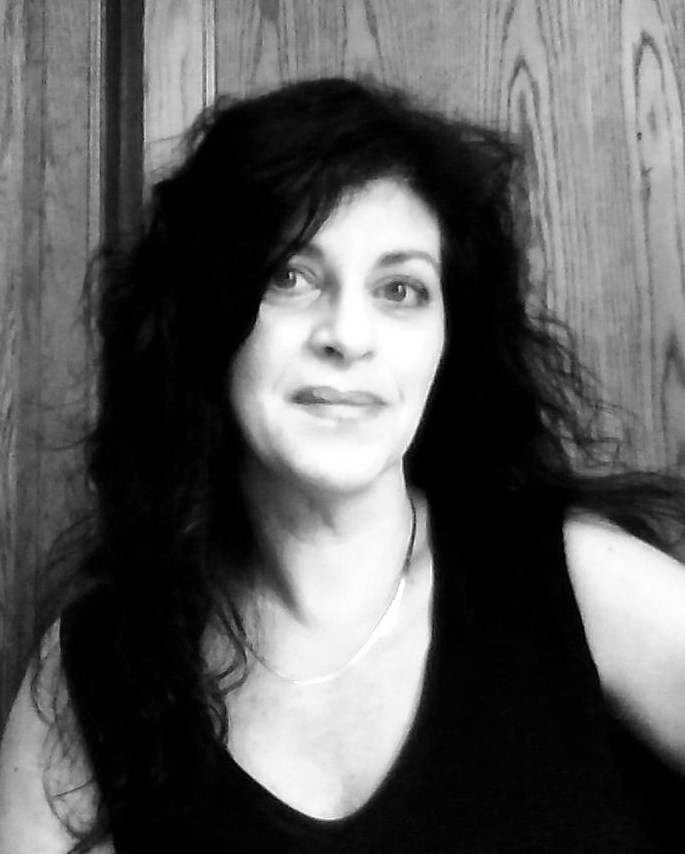
Beverly Akerman

For most of her adult life, Beverly Akerman was a molecular genetics researcher at McGill University and the Montreal Children’s Hospital. But in 2003, after several years of feeling an underlying malaise and professional unhappiness, she decided to make a mid-life career switch. Following dreams she set aside for 20 years as a busy working mother of three, Akerman became a fiction writer. She published her first short story in early 2006, making her the first Canadian fiction writer ever to have sequenced her own DNA.

Akerman, a 52-year-old lifelong Montrealer, has published more than 20 stories to date, 14 of which are included in a 2010 collection titled, “The Meaning of Children.” Her fiction has appeared in Canada, the U.S. and Germany and has received numerous recognitions, including the David Adams Richards Prize, the J.I. Segal Award, nominations for a Pushcart Prize, and a place among the CBC-Scotiabank Giller Prize Readers’ Choice Top 10. Akerman spoke to the Sisterhood about her book, her hometown, her Jewish identity and her aversion to happy endings.

THE SISTERHOOD: All of the stories in “The Meaning of Children,” except for one, are written from the perspectives of girls or women. Do you generally only write from the female point of view?

BEVERLY AKERMAN: I’m a strong feminist and I don’t think that there are enough women’s stories told. Literature is full of women’s books, but not these kinds of stories… There are things that girl children go through that are interesting to me. I do have more stories now that are written from a male point of view, but I intended to write from a woman’s point of view.

To what extent are these stories autobiographical?
The child stories come from things that bothered me in my past. They were not maybe literally things that happened to me, but they were drawn from certain images from my childhood. In some cases, there are experiences of mine and of people I know in the stories. For instance, I do write a lot about foster children, and growing up my parents did take in foster children. Writing about foster children has been a kind of my way of saying goodbye to them. I think my parents were, at the time, more concerned about the foster children re-integrating with their families than with what it was like for us to part with these children after having shared a life with them.

The collection is divided into three parts — Beginning, Middle and End — and each one corresponds to a major life stage. Do you feel more comfortable writing about one of those stages?


Monday, 14 May 2012

'The Meaning Of Children' an honourable mention for the 2012 Eric Hoffer Book Awards

Very pleased to note that 'The Meaning Of Children' was a finalist and honourable mention for the 2012 Eric Hoffer Book Awards in the General Fiction category! 


Here is what the judges said about 'The Meaning Of Children':


'Akerman's thoughtful short story collection is elegantly written and offers subtle insights as they are interpreted and experienced through children. In "The Mysteries," a young girl's brief encounter with a stranger forces her to question the very nature of truth. "Broken" examines the intricacies of gender in terms of loyalty and identification. Akerman tackles more adult matters just as deftly–the inner turmoil stirred during a reluctant abortion, the personal anguish of questionable paternity, the devastation of losing a child—each story is nuanced and compelling, leaving its imprint long after the last page is turned.' 


About the Eric Hoffer Awards for Independent Books:

"Each year, independent publishers (academic, independent, small press, and self-published authors) release extraordinary books to little or no recognition. The Eric Hoffer Award for independent books recognizes excellence in publishing with a $2,000 grand prize and various category honors and press type distinctions, as well as the winners of the Montaigne Medal, da Vinci Eye, and First Horizon Award. The book awards are covered in the US Review of Books. After the contest, books are donated to libraries, schools, and hospitals where appropriate."


Here are the award winners in the category:


GENERAL FICTION  

Winner: Blood Clay, Valerie Nieman, Press 53

1st Runner-Up:
* Green Gospel, L.C. Fiore, Livingston Press (University of Alabama)
 

Honorable Mentions:
* Crooked Creek, Maximilian Werner, Torrey House Press
* The Meaning of Children, Beverly Akerman, Exile Editions
* Alabaster Houses, Lara McLaughlin, Wye Knot Books
* Letters in Cardboard Boxes, Abbey Slovin, Abbey Slovin


To find out about the winners and placers in other categories, please consult http://www.hofferaward.com/HAbookwinners.html. 


Eric Hoffer 2012 

GRAND PRIZE WINNER:


* Too Shy For Show-and-Tell, Beth Bracken, illustrated by Jennifer Bell, Picture Window Books


Congratulations to all the recognized 
authors, books, and publishers!

Tuesday, 8 November 2011

The Meaning of Children: An Interview with Beverly Akerman by Darryl Salach


The Meaning Of Children: now available on Kindle!


1.) You spent twenty years working in molecular genetics research, before deciding to become a writer. Why the sudden urge to become a writer and how difficult a transition was it?
The urge wasn’t sudden, though it might appear so from here. I always intended to be a writer “some day,” but I never entertained it as a way to support myself or my family. And I remember feeling I had to amass some experience in life, wondering what I would have to say as a 20-year-old. Maybe that was just that ol’ deflating self-doubt. But in 2003, my father-in-law died and I suddenly—viscerally—understood that my time, too, was finite, that I better seize this day and do the things I’ve dreamed of doing. Because sometimes “later” doesn’t quite work out.

2.) I found an interesting line in your bio that reads, "Beverly Akerman realized she'd been learning more and more about less and less." What did you mean by that exactly?
What I meant is that genetics used to be the study of individuals, traits, and populations. Then it became the study of chromosomes. Now it’s the study of molecules. In other words, the areas of concern grow more minute as time passed. I grew tired of trying to believe in the importance of the vanishingly small. Also, despite the passage of a generation, cures for genetic disease are still few and far between. We can prevent a lot more disease, usually through selective abortion. But worldwide, the largest use of therapeutic abortion is sex selection. I guess I stopped believing in the value of what I was doing. No matter how well-intentioned. It started to feel like, “the hurrier I went, the behinder I got.”

3.) Did you have a mentor or someone that helped guide you through the early days of your transformation into becoming a writer, and how valuable was that to you?
I’ve been fortunate in having a number of wonderfully generous writing teachers; I won a Quebec Writers Federation mentorship with noted poet Robyn Sarah, and studied for brief periods in the US and Canada with Luis Urrea, Nancy Zafris, Brad Kessler, Neale McDevitt, Mikhail Iossel, Tess Fragoulis and many others. In taking my work seriously, these writers helped me to take my aspirations seriously. They helped me learn to shush that internal yenta, that nudgy little voice that said, “who do you think you are?” That has been very important and empowering. Still is, in fact.

4.) What was the genesis behind putting together your collection of short stories The Meaning of Children and how long of a time period did it take to write the stories for the book?


I started publishing my short stories in 2006. By 2010, I had over 20 out there, many winning or placing in contests. The next step was to publish a book. Maybe it should have been a novel, from a marketing point of view (agents and publishers seem to think no one reads short stories…unless the author’s name is Munro). I started submitting a huge collection which included unpublished work. No dice.
So I looked at them all again and tried to find some commonality, some thread other than that they were all written by me. I realized how central children were in my work and decided to structure the book in three parts: ‘Beginning’ features first person point of view stories of children, ‘Middle’ tells of those in the child-bearing years, and ‘End’ is about older people, or stories that take the longer view of life.
And bingo! Of course, life is an uncontrolled experiment, isn’t it?
I started negotiating with Exile Editions. And then Enfield & Wizenty told me I was one of three finalists for their 2011 Colophon Prize.

But it was too late to back out of the first negotiation (I hadn’t signed anything but…well, let’s just say it was complicated). The three E&W finalists would win publishing contracts (the only difference was the size of the advance). I recently discovered the overall winner was W.P. Kinsella, for his first novel in decades (Butterfly Winter). Pretty impressive company to be in.

5.) How difficult was raising three children of your own, and were those mothering years paramount in giving you the ability and proper perspective in order to be able to write these kinds of stories?
As a student of genetics, I’ve always been taught that life is all about producing the next generation…As a feminist, I always intended to have meaningful work and not let motherhood stop me. The truth is, women can have it all—just not at the same time.

Having children is one of the most significant experiences of the human adventure. At the same time, despite all these wonderful supports available in Canada and in Quebec—paternity leave, $7 a day daycare—it is still hard to combine full-time work and motherhood. Very hard. My husband, former MNA Russell Copeman, travelled a lot in his job—we estimated he was gone about three whole YEARS of the first decade when our kids were growing up. That put a lot of pressure on me. So I have a fine-tuned appreciation of the under-appreciated bailiwick of women.
Mothering—and the other nurturing professions largely filled by women—are still systematically devalued in our culture. And that’s a damn shame. I read the papers and it frustrates me that there are so few front section articles where the featured newsmaker is a woman.
Which is another way of saying that being a working mother is absolutely essential to who I am, and the kind of book I’ve written.


6.) Do you have a personal story from your collection that you feel closer to than any of the others, and if so why?
I feel close to all the stories, they’re all my “babies.” And all, in their way, semi-autobiographical. Even the fantastical one, “The Woman with Deadly Hands.” I wrote part of that one naked in the Super 8 Airport Motel in Portland, Oregon, after I woke early from a disturbing dream. I continued writing it later that day in the San Francisco airport while awaiting a connecting flight (don’t worry: I’d put on some clothes by then!). As writers, we’re always told to read, read, READ! Which I do. But can one read too much? That’s what the story is about. To me, anyway.

7.) All of your stories have a recurring theme to them: sex, death, guilt, and social prejudice. How difficult was it for you to capture the complexities of these themes and emotions through a child's eyes?
I wouldn’t say ALL my stories deal with these themes…but childhood is fraught with sex, death, guilt, and bigotry. We live in a great country but it’s by no means perfect. And we shouldn’t over idealize childhood. It isn’t all Care Bears and unicorns. By the time my kids got to elementary school, half the kids in their classes were already children of divorce. Of course, where I live, most parents never even marry in the first place.
 
It’s not for me to say how difficult it is to capture complex situations through a kid’s point of view. I had a pretty mature grasp of a lot of the world as a kid. I can recall talking about the Vietnam War and the Hiroshima and Nagasaki bombings with my Dad when I was 9 or 10 years old. Kids are smart and often deep. One of my own children, while working through his bar mitzvah project, told me couldn’t believe in God because of the Holocaust.
It may comfort adults to believe children aren’t aware of big picture issues, but they are. Maybe those who don’t realize this just haven’t spent enough time with kids. And my kids are upper middle class kids, never been beaten (or seen their mother being beaten), never gone hungry…

8.) Do you see life possibly getting any easier for children in today's world and the generations of children to come?
I think children suffer when adults are under more pressure. We live in a very pessimistic society compared to when I was growing up in the ‘60s and ‘70s. At the same time, by most conceivable measures, we’re better off now than a century back—I mean, a century ago, half of Canadian children were still dying by the age of five. But you wouldn’t know that from reading the papers or watching the news. Because fear is the best marketing tool there is. Check out Michael Moore. We could use a good dose of optimism.

9.) What was the last book you read that you felt inspired by in some way, and why?
One of my current projects is to reread the books I was assigned in school as a kid. So I’d choose Steinbeck’s The Grapes of Wrath. Big issues and a writer who tried to make a difference with his stories. Chris Cleave’s Little Bee is a more recent book in this inspiring vein. I also can’t speak highly enough of To Kill a Mockingbird, a book as much about parenting as about racism (though I didn’t see that at all as a 12-year-old; one of my bugaboos is that we give kids books to read that aren’t really appropriate. Another is that schools are still giving kids the same books to read that I got 30 years ago—but I digress). 


My favourite book of all time is Barney’s Version . Richler so perfectly crystallized the concerns of his character’s point in place and time. I admire Lionel Shriver so much for her fearless take on motherhood in We Have to Talk About Kevin, a much braver book than Room or The Book of Negroes, IMHO. I’m not big on mindless anomie, navel gazing, or young people fucking.


Finally, The Loved and The Lost has always stuck with me. TLATL is the first CanLit novels I remember reading as a really young person. This great novel of the immorality of racism also takes place in Montreal; the main character is Jim McAlpine. My last science job ended in 2003, when I left a biotech company called Ecopia. Some time during the last year or so I was there, a new VP was recruited from the States, a man named Jim McAlpine. 


Now, I hadn’t thought of TLATL for years at that point, but the moment I heard the new VP’s name, all I could think of was that this was the same name as Callaghan’s protagonist in TLATL.


I dug up my old copy and brought it to work; it sat in my desk drawer for months while I tried to work up the nerve to show the biochemist his literary namesake. I could never do it. Every time I caught sight of the paperback, I puzzled over why the coincidence of the names meant so much to me.


Eventually, I recognized this was part of the reason I had to quit science and try writing. It’s a nice bonus that Exile Editions is run by Morley’s grandson Michael Callaghan. I’m a sucker for stuff like that.


10.) In your opinion, what makes a good short story? Is there a particular formula that you try and stick to when you write?
I don’t believe in formulas, per se. But the writer has to be moved by her own subject or she won’t be able to bring the reader along with her. A story is a shared emotional journey, after all. And I do believe in moving the reader. I’m sick to death of stories that make me want to kill myself at the end—I mean, real life can be hard enough, why do I need to read about the world ending for some fictional character, too? Of course, I also write about the world ending, but I try to write from a place of hopefulness, if that makes any sense. Which may sound strange because so many of the stories in my collection are dark. But I keep hoping to understand what happened in life, to myself or my characters (who are just proxies, in a way).
I love a story with a moral wrapped in humour. One of my favourites isn’t even in the collection. It’s weird and whimsical, about Santa Claus, Brian Mulroney, and Karlheinz Schreiber.
“Based on a true story,” as they say. But I just couldn’t see it fitting into my “Beginning,” “Middle,” and “End” structure. Maybe if I’d had a little more time to discuss it with my publisher…calling our production schedule compressed misses the truth by at least an order of magnitude.
Anyway, “Now It Can Be Told: The Hardboiled Stress of Being Santa” is up at Joyland.ca and I hope people will enjoy reading it as much as I enjoyed writing it…and rereading it. It features footnotes and links, but the final one isn’t quite working on the Joyland site. Here’s the url that the last word of the story should be linked to: 
Hope it gives you a few laughs. It did me!

11.) How difficult was it finding a publisher for The Meaning of Children and what's your experience been like with Exile Editions?

It’s my first book so I guess I can’t really judge how difficult it was. More difficult than I’d hoped, anyway. But the market is undergoing such changes, the loss of bricks and mortar stores, the advent of e-books…Exile have been great. I’ve had launches in Montreal and Toronto and there’s been talk of a small reading tour. I’m hopeful for the future; maybe it depends on awards and such…it’s still early days yet.

One thing, though: I’ve taken a gamble and kept all rights EXCEPT Canadian print. I’m hoping to find an agent who can bring the print and e-books to all other markets; I’m dreaming of film... Please cross all crossables for me, and help me spread the word!

12.) The Meaning of Children has been longlisted for a 2011 ReLit Award. How does that kind of recognition make you feel and to what extent do awards help open doors for writers?
I am thrilled to be longlisted for the ReLit; last year Lisa Foad, another Exile writer, won the ReLit for short fiction. She also edited my collection, so I’m sure that’s helped.
I’ve always believed in submitting to contests—spent a small fortune doing it, over the past few years. But I think it’s been worth it: I’m a winner of
--the Writers’ Federation of New Brunswick’s David Adams Richards Prize,
--the Professional Writers Association of Canada’s Short Article Award
--The Vocabula Review’s Well-Written Writing Contest
--an Editor’s Choice Award, Best New Writing 2011/Eric Hoffer Award
--a Fishtrap Fellowship
--Gemini Magazine’s Flash Fiction Contest
--the Fog City Writers Short Story Contest
And I’ve placed or been a finalist in
--the Sheldon Currie Fiction Contest,
--TWUC’s Short Prose Contest for Developing Writers (twice)
--The Potomac Review’s Fiction Contest
--The Glass Woman Prize.
I’ve also been nominated for the Puschart Prize in both fiction and nonfiction, received funding from The Banff Centre for the Arts, The Canada Council, and the Playwrights Guild of Canada to attend a residency, give readings, and see my first monologue professionally performed. I’ve travelled to Banff, Fredericton, Winnipeg, Ohio, and Oregon, solely for my work as a writer.

These contest accolades have helped me create a substantial literary CV. There is so much rejection in this business—the feedback from these contests has made a huge difference. It’s been a wonderful ride so far.


13.) What inspires you creatively, spiritually or emotionally?
Kindness and compassion, people being moved by the work and devotion of others.
How much some of us do, so unselfishly, for others. The feeling of being in this
together—I guess it’s just that ol’ John Donne thing: 
 
No man is an island entire of itself; every man 
is a piece of the continent, a part of the main; 
if a clod be washed away by the sea, Europe 
is the less, as well as if a promontory were, as 
well as any manner of thy friends or of thine 
own were; any man's death diminishes me, 
because I am involved in mankind. 
And therefore never send to know for whom 
the bell tolls; it tolls for thee.
 
Seeing kids enjoy things. My mother used to take my kids to see plays put on occasional Saturday mornings at The Centaur Theatre–the rapt look on the funny little faces in the audience used to make me cry. Probably still would. Luckily, my kids are grown and I don’t have to humiliate myself in public to the same degree anymore.

But I’m still trying to move people.


14.) How important is it for you to read your stories in front of a live audience, and to what extent do you think that experience helps you with your writing?
I LOVE reading my work aloud! It helps that I’ve got one particular piece—“Pie”—that’s a monologue and in a Southern drawl. Which I can do…people are always somehow surprised by my readings, I think. 

Here’s a link to a reading I gave as part of a residency at The Banff Centre for the Arts.

I think it gave me real credibility to be able to get up there and slay the audience. I mean, I’m “just” a middle-aged woman. Not a sexy young thing, not a flavour-of-the-month. “Just” a writer with the courage to pull some wonderful stories out of my hat…er, psyche. When people enjoy my work right there in front of me, it gives me an incredible boost.

16.) What words of advice would you give people out there working a job they might be tiring of and wanting to try their own hand at becoming a writer?
First of all, marry well, someone who truly supports you (actually, that’s good advice no matter WHAT you want to do!!) I don’t want to be glib about this—I’m earning a fraction of what I did as a researcher. And I never really earned all that much money at that…but I think people should really try to find the thing they were meant to do. You’ll know it when you find it. And when that feeling goes away, find something else that does it for you. ; I could never do what I’m doing without hubby’s financial help.

Other advice: take courses and workshops, find a writing group, and a professional organization like PWAC (http://pwac.ca/) that can help you make contacts. (I’m also a freelance writer—my work has appeared Macleans, The Toronto Star, The National Post, The Montreal Gazette, and on CBC Radio One, as well as in many other lay publications and learned journals.)

If you haven’t already, read these “rules” for writing fiction, put together by The Guardian http://www.guardian.co.uk/books/2010/feb/20/ten-rules-for-writing-fiction-part-one.
Finally, if you’re unhappy, try changing some of the things in your life: I changed jobs and moved house a number of times before I faced up to the cause of my malaise. Get a good therapist, if you have to.
Seriously.

Finally, you’ve got to BELIEVE you can do it. I can’t stress that enough: if you’re going to plunge into a realm that’s 99% rejection, you better really believe you’ve got the goods. Or you’ll be demolished by it.


17.) What's next for you? Are you working on a new book and when should we expect it to be published?


I’m trying to get this book into the hands of an agent who will bring it to the US (and other) market(s). I’ve sent the book to a film maker who sent me back a really nice note instead of laughing in my face. I keep dreaming/hoping/believing. And trying to figure out how to write a novel…believe me, I’ll be more than happy to let you know when it’s going to be published!

[The Meaning Of Children is available in fine bookstores across Canada and online at Amazon.ca, Chapters, and through Exile Editions]

Saturday, 16 July 2011

Author! Author! An Interview with Beverly Akerman


After over two decades in molecular genetics research, Beverly Akerman realized she’d been learning more and more about less and less. Skittish at the prospect of knowing everything about nothing, she turned, for solace, to writing. The results are impressive: She’s been nominated for the Pushcart Prize (fiction and nonfiction) and National Magazine Awards. Her credits include Maclean’s Magazine, The Toronto Star, The National Post, The Montreal Gazette and CBC Radio One’s Sunday Edition, myriad literary and scientific journals and other publications. And, now, she has a collection of short stories titled The Meaning of Children, published with Exile Editions.

In The Meaning of Children, Beverly presents us with 14 stories that approach the world’s complexities through a child’s eyes (Beginning), grapple with the sorrows and ecstasies of the child-bearing years (Middle), and probe truths that emerge near the end of life’s journey (End). The Meaning of Children speaks to all of us who—though aware the world can be a very dark place—can’t help but long for redemption.

You are a master story teller Beverly. What, in your opinion, makes a great short story and what did you have to pay attention to as a writer?

Everyone’s time is precious, particularly my reader’s. So if I want people to read something I’ve written, there has to be something in it for them. Like, a good story.

I write literary fiction (or try to), but I think some readers (and writers!) have decided that means stories where nothing much happens. Well, in my stories, the kernel is an event that creates a significant emotional response in the reader. I don’t want to spend all my time in a character’s head when I’m reading a book myself, so I’m not going to write stories where the protagonist spends all her time moaning and groaning about her lot. I don’t believe in anomie. I don’t believe in books about nothing more than young people f*cking.

Emotion is important and at the crux of everything. So emotional experiences matter. Paring down the prose matters. Beginning, middle, end. The character has to change (or miss a grand opportunity for growth), and the reader has to know that.

Getting a book of short stories published with a prestigious publisher like Exile Editions is everyone’s dream. Tell us a bit about getting them on board.

I’m really pleased to be published by Exile for a number of reasons. They’re a small literary publisher with a solid gold reputation—they’ve published some of the great writers of our time— Yehuda Amichai , Pablo Neruda , Morley Callaghan , Austin Clarke , Lauren B. Davis , Michael Moriarty , Joyce Carol Oates , Boris Pasternak , to name a few. But the secret reason I’m thrilled with Exile (I’m a diaspora Jew—even the name “Exile” pleases me!) is that it was founded by Barry Callaghan, who is Morley Callaghan’s son. The current publisher is Michael Callaghan, Barry’s son and Morley’s grandson.

But that’s not the secret.

The secret is that Morley Callaghan is fundamental to my having become a writer. And in more ways than one.

First of all, his 1951 masterpiece, The Loved and The Lost, has always stuck with me. This great novel of the immorality of racism takes place in Montreal , and the protagonist is a man named Jim McAlpine. TLATL is one of the first CanLit novels I remember reading as a really young person. My last science job ended in 2003, when I left a biotech company called Ecopia. Some time during the last year or so that I worked there, a new VP was recruited from the States, a man named Jim McAlpine.

"A day is full of possibilities… " Beverly says. (Photo taken by author; dawn in Ogunquit, Maine)

Now I hadn’t thought of TLATL for years, but the moment I heard the new VP’s name, my first thought was, “that’s the name of Callaghan’s protagonist in TLATL.” I dug up my old copy of the book and brought it into work, where it sat in my desk drawer for months (I never worked up the nerve to show the biochemist Jim McAlpine; I figured he’d think I was a loon!). Every time I caught sight of it, I puzzled over the coincidence of the names and why it meant so much to me. Eventually, I realized that I had to quit science because what I really wanted to do was write.

So Morley Callaghan taught me two absolutely vital things: that the place I lived could be interesting enough to sustain a Governor General Award-winning novel—remember, this was before I’d ever read anything by Richler!—and that a novel I hadn’t looked at for a couple of decades still meant that much to me.

There was one more really fundamental thing that put me on the path to being a writer: the death of my father-in-law, Gerry Copeman. Gerry and I didn’t get along that well, though we’d made our peace. But when he died, I plunged into a crisis: I understood—emotionally, as opposed to rationally or intellectually—that my time on this earth was finite, and I’d better use it doing something I’d always dreamed of doing—which was writing fiction.

Let me take another stab at answering your question, though. I submitted to Exile more than once. I just kept at it. They had my manuscript for close to 2 years, without a contract. The length of time I found very trying, I can’t deny it. But, if there’s a message here, it’s to believe in your work and not give up.

And, by the way, as far as submitting short stories goes, I submitted like mad. And I pretty much completely disregarded any demands not to submit simultaneously—that is, I submitted each story to many lit journals at the same time. That’s supposed to be a no-no. But really, if I needed to face 10 rejections before an acceptance (and that’d be an easy road for most of my stories!), and each journal took six months to answer me, that’d be five years before I got a story accepted…at that rate, I’d’ve been DEAD before having a significant body of stories in print!

Reprinted, with kind permission, from SandraPhinney.com.

Thursday, 30 June 2011

The Meaning of Children under consideration for The Giller Prize


I'm honoured to announce that my book, The Meaning Of Children, has been submitted by my publisher, Exile Editions to be considered for The Giller Prize, Canada's "richest literary award for fiction."
You can find the listing for The Meaning of Children and the other submitted books at this page on The Giller website!
For a "taste" of The Meaning Of Children, please try my "Pie."

Long list announcement: September 6, 2011.

Short list to be announced: October 4, 2011.

Winner to be announced: November 8, 2011.

Wednesday, 2 February 2011

Beverly Akerman's The Meaning of Children released by Exile Editions

My first book, The Meaning of Children, has just been released by Exile Editions! This award-winning collection is available through my publisher, Chapters.Indigo.ca or Amazon.ca and will be in stores soon!


A version of the manuscript won the 2010 David Adams Richards Prize from the Writers’ Federation of New Brunswick. Judge JoAnne Soper-Cook said the work shows

a keen, incisive vision into the hidden world of children as well as intimate knowledge of the secret spaces that exist between the everyday events of life. There is knowledge here, knowledge of those important, life defining moments of puberty, the birth of a sibling, an encounter with a possibly dangerous stranger. Overall, a work with a brilliant sense of story.

Individual stories have also won or placed in contests, including the Sheldon Currie Prize and Best New Writing 2011 (Editor's Choice Award). Here’s a sampling of the feedback received from editors and judges on individual stories:

“Emotional and tightly written.” David Bright, Gemini Magazine;

“Solid and very funny. Great stuff!” Karl Jirgens, Rampike;

“Oh, it's lovely. I like it when my body responds to writing; right now there's an ache in my throat.” Susan Rendell, EarLit Shorts;

“The judges liked…the resistance to the happy ending, and the idea that there is often something or someone waiting for the small mistake.” The Writers’ Union of Canada, 2007 Short Prose Competition Jury

“I love the mystery and the fear in this story—the ending works so well.” Colleen Donfield, The Sun;

“...beautifully unbearable...” Nancy Zafris, Flannery O'Connor Awards.

These fourteen stories approach the world’s complexities through a child’s eyes (‘Beginning’), grapple with the sorrows and ecstasies of the child-bearing years (‘Middle’), and probe truths that confer a child-like clarity near the end of life’s journey (‘End’). A girl discovers a fear of heights as her parents’ marriage unravels; a thirty-something venture fund manager frets over his daughter’s paternity; an orphan whose hands kill whatever they touch is accused of homophobia; a mother of two can only bear to consider abortion in the second person; the wife of a retirement-aged professor finds him unconscious near his computer…The Meaning of Children speaks to all of us who—though aware the world can be a very dark place—can’t help but long for redemption.

About me:

After over two decades in molecular genetics research, I realized I'd been learning more and more about less and less. Skittish at the prospect of knowing everything about nothing, I turned, for solace, to writing. Recent accolades include nominations for the Pushcart Prize (fiction and nonfiction) and National Magazine Awards. Credits include The Antigonish Review, Best New Writing 2011, The Binnacle, BluePrintReview, carte blanche, Cellstories.net, Cliterature, The Dalhousie Review, Descant, EarLit Shorts, Exile Quarterly, Fictionaut, Fog City Review, Grain, Joyland.ca, The Nashwaak Review, The New Quarterly, On the Premises, Rampike, Red Wheelbarrow, Rio Grande Review, r.kv.r.y quarterly, The Vocabula Review, Windsor Review, myriad other lay publications and learned journals. It pleases me strangely to believe I'm the only Canadian fiction writer ever to have sequenced her own DNA.


Harry Potter and the Goblet of Fire (Harry Potter, #4)