Showing posts with label compassion. Show all posts

Wednesday, 25 April 2012

Seeking a mother's day gift that's a little out of the ordinary?


Hey publicity/media peeps: desperate for a mother's day story a little out of the ordinary? 


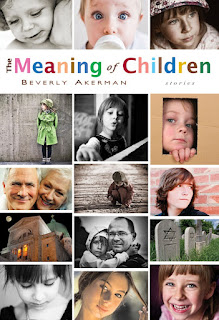
May I recommend 'The Meaning Of Children': a book of short fiction...motherhood without an epidural. Because growing up takes longer than you'd think. And the process isn't always pretty. 

Not the 'hearts & flowers' kind of mother's day gift...more like the kind of book your bff hands you, saying, "Read this..."

Abortion, homophobia, foster kids, bondage, romance, an epiphany at St. Joseph's Oratory...a misunderstood eight-year-old, a suicidal daycare worker having a very bad day, a mother who lost a son in Vietnam. These are the characters you'll find in the award-winning 'The Meaning Of Children.'

Available in paperback and e-book versions.


A couple of recent reader reviews:

"Akerman takes you back to the time you were a child. No matter you did not grow up in Montreal or Jewish, the situations, conflicts, joys and fears are universal.
Akerman grounds emotions with rich descriptions and a strong sense of place," ~twalker on Amazon.com and
"Entering the world of 'The Meaning Of Children' is like wrapping myself in the blanket my grandmother knit for me.I can feel every word, hear every sound, and be taken to a familiar place in my soul. You are a brilliant woman with a great spirit whose writing will resonate with many. Thank you." ~Judith Litvack on Facebook

David Adams Richards Prize
CBC- Scotiabank Giller Prize Readers' ChoiceContest Top 10

More here: http://beverlyakerman.blogspot.ca/2012/04/perfect-for-mothers-day-meaning-of.html

The Meaning of Children, now on an e-book (don't forget: Amazon has free apps for other devices!).
http://amzn.to/AiGGsm

http://www.cbc.ca/cinqasix/books/2012/04/02/cutting-out-the-middle-man/

“Akerman holds up our greatest fears, not to dwell on them, but to marvel at our commitment to life, especially to passing it on to others.”
~Anne Chudobiak, The Montreal Gazette

“This isn’t the invented childhood of imagination and wonderment…[here] children both corrupt and redeem: each other, family relationships and the female body.”
~Katie Hewitt, The Globe & Mail

TV & Radio Interviews: http://www.youtube.com/watch?v=K0i9teebBxk; http://www.youtube.com/watch?v=dyOp2wQlxvk; http://www.youtube.com/watch?v=djOXwJasZes

Saturday, 8 January 2011

Suicide and its Survivors: When People We Know Kill Themselves


(My first commissioned professional article, Originally published in The National Review of Medicine issue of January 30, 2004. I reproduce it here because suicide remains an issue close to my heart. If you know of someone struggling with depression or suicide--or close to someone who is--please reach out. In Montreal, please contact Suicide Action Montreal, tel. 514-723-4000 or 1-877-277-3553. Outside Quebec, you can find helplines at http://suicidehotlines.com/canada.html.  Remember: concern and compassion work wonders. Godspeed.)

Eli Puterman is an engaging young man with a ready smile. Currently studying clinical psychology at the University of British Columbia, he was 22 when his partner committed suicide. Stephane was found in a field behind Eli's parents' home, clutching a photo of Eli. He expired in hospital of an overdose and hypothermia. Eli had just terminated their year-long relationship, several months after having found Stephane in their apartment, the veins of one arm slashed. 

Although news to Eli, Stephane had made several previous suicide attempts In the aftermath of the suicide, no counselling was offered or suggested. Says Mr Puterman: "one of the doctors was the only [person] to acknowledge that I was the partner, the boyfriend. He was the only one who asked me how I was doing, put his arm around me to see if I was okay. And let me speak for a bit. I was destroyed for awhile. I was a zombie. I had a friend, a psychologist, who called me once a week to make sure that I was okay, to see if I had gone into therapy yet. Finally she said to me 'What are you waiting for?' It took about three months for me to get into therapy. I didn't want to. I kind of thought that I should, wasn't sure, felt I could cope on my own. Therapy was the best thing I ever did in my life, to reach out and talk about it." 

GETTING HELP

Caroline Smart is a facilitator with the self-help group Family Survivors of Suicide (FSOS). Many of the people she encounters had no idea that their loved one was wrestling with death; half of suicides succeed on their first attempt. "I often recommend the Kubler-Ross book On Death and Dying to our survivors, because they go through the same sort of grief process dying people experience", she asserts, referring to shock and denial, anger, bargaining, depression, and acceptance. The double stigma of suicide and mental illness differentiates the grief of survivors, however. Some survivors experience guilt-tinged relief, liberated from the stress of caring for or coping with a mentally ill person. 


After the first unsuccessful slashed wrist attempt, Eli had Stephane admitted to a local hospital. After three days he was discharged. What Eli interpreted as the system's callowness has plagued him ever since. "... they let him go. There was no follow-up interview. There was nothing! And I freaked out. I begged every single person in his life except for his family -- he didn't want his family -- to take him in, because I couldn't take care of him. And no one wanted to. Everyone had helped him already, they were tired of helping him."

HELPING OTHERS

Several years later, Eli was asked to facilitate a teen survivors group. He told them, "Many people feel guilty after somebody has killed themselves; they think 'I should have been the person who brought them to the hospital. I should have been the person who made sure they went to see a psychologist or a psychiatrist'. Everyone I know who has survived a suicide has tried to help the person who committed suicide. Everyone has tried to talk to them and to convince them to get help." 


Systematic study of survivors is in its infancy; Dr. Gustavo Turecki of the McGill Group for Suicide Studies hopes to develop a centre to support families and treat pathological bereavement. His multi-disciplinary group focuses on genetics, molecular biology of the brains of suicide completers (e.g. dense microarray gene expression studies) and clinical studies (e.g. psychological autopsies, family studies). Currently, support for survivors is mostly provided by self-help groups such as FSOS. 

Declares Caroline Smart: "We get people, sometimes, after 30 years; they have only just decided to talk." McGill's Social Work Faculty created the group in 1988, spurred by parent-survivors. It meets bi-weekly, from September to June. Catholic Family Services provides non-denominational referral backup, helping too with administration and planning. Survivors share their experiences, or simply listen. Self-expression, in many forms, is strongly encouraged. FSOS has semi-annual open meetings, and has organized other events, such as a vernissage of survivors' artworks. 

Meeting those who have managed to continue meaningful lives following suicide is a great comfort to the newly bereaved: "It shows them they can go on, and go on to have good lives, too." Caroline, a survivor herself, notes that invited speakers suffer from a credibility problem unless they too are survivors. Often what clients need most is to tell their stories. "We are trying to get the word out . . . we do get referrals from a number of sources already but don't feel that our name is out there, the way it should be," she says.